Planning a Family Trip to Abu Simbel: Things to Know Before You Go

Planning a family trip to Abu Simbel means accepting one thing upfront, unless you’re staying in Abu Simbel, it takes hours to get there. And most of us don’t have enough time to spend a few days in Abu Simbel.
The fastest way to get to the temples is to drive 3.5-hours each way from Aswan. Or fly in from Cairo.
Abu Simbel is located at the border with Sudan. It’s off the beaten path. And yes, it’s still worth it, if you know how to get there and where to stay.
My son thought the temples were impressive. What actually got him was finding out they’d been moved.
Not “moved” as in repositioned. Workers cut the temples into pieces and rebuilt them 200 meters away so Lake Nasser wouldn’t swallow them whole. He brought it up the entire drive back to Aswan.
That’s Abu Simbel in a nutshell. It’s not just two giant temples carved into a cliff. It’s one of the most ambitious rescue missions in archaeological history, and that story does more to make ancient Egypt click for kids than any amount of staring at hieroglyphs.
Just find out what the best time is to visit Abu Simbel, and how to arrange your trip there and I’ll assure you: you won’t regret traveling the extra hours all the way down south in Upper Egypt.
No time to read?
Save on Pinterest and read this article later!

Why You Should Visit the Temples of Abu Simbel with Kids
Let’s start with why you should visit Abu Simbel with children. You’ll get to see two impressive temples. One for Ramesses (or Ramses) II and one for his favorite wife Nefertari. Ramses II gave the order to build the temples.
It is quite rare to find a temple for a queen (Hatshepsut’s temple in Luxor is another exception) and a great example of girl power to show your daughters.
The sheer size of the temples, the temple of Ramesses II, the largest temple in Ancient Nubia, is one of its biggest draws. The others are the gorgeous facades with a huge amount of details carved into the rocks and the insides of the temples.
You can find hieroglyphics all over Egypt, but the colors are washed away by time. Here you get to see them in all their glory, just like inside the tombs in the Valley of the Kings in Luxor.
Kids will love to roam around inside the temples, because it simply feels like you’ve opened the doors to the past. And they’ll also enjoy hearing the story of the Abu Simbel move in the 60s of last century.
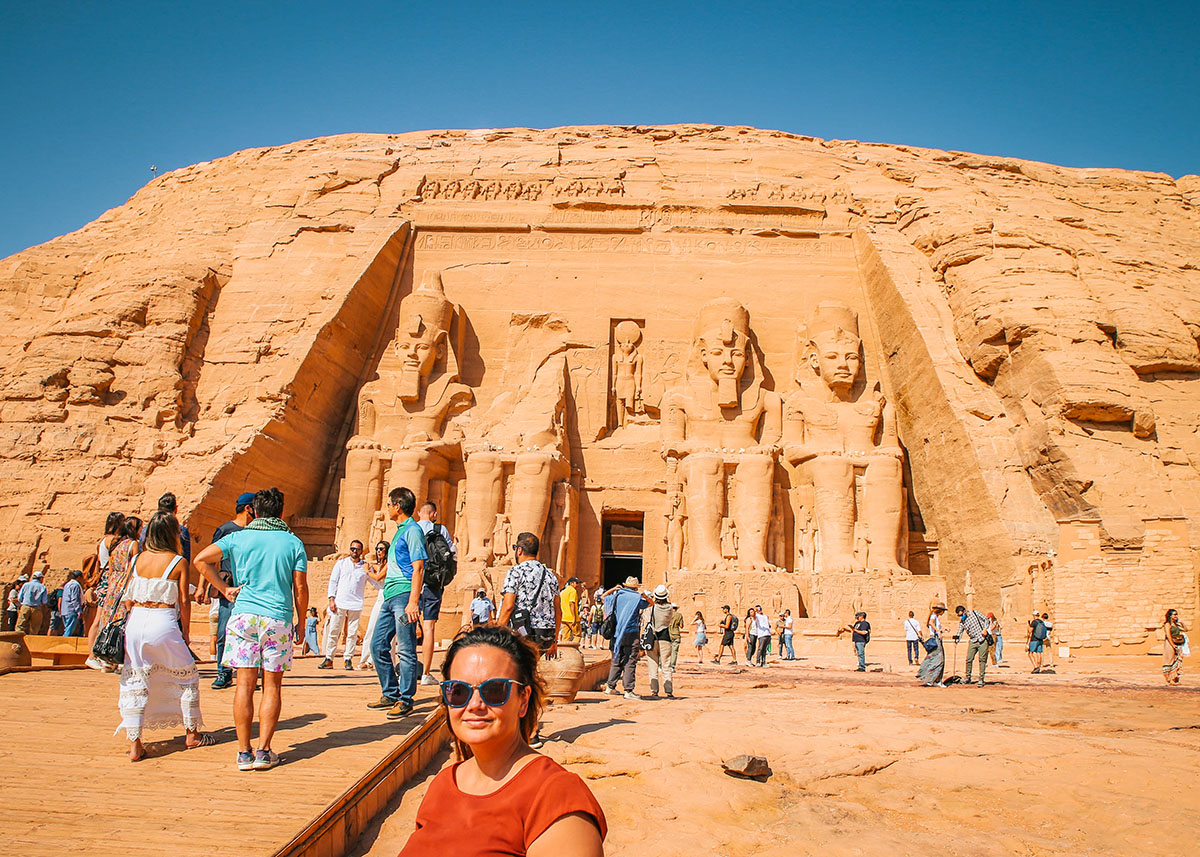
Why Abu Simbel is a Great Choice for a Family Visit
Abu Simbel makes for an awesome day trip with kids while you’re in Aswan. Or you can stay in Abu Simbel overnight before going back. There’s not much else to see in this small town besides the temples.
According to our guide, kids often say that Abu Simbel is as cool as the Karnak Temple in Luxor.
We decided that it’s our family’s 2nd most favorite temple complex in Egypt. Karnak holds the first place and Philae Temple in Aswan closes our top 3.
In other words, a visit to Abu Simbel is a must-do for kids and parents. It’s one of the best ancient Egyptian sites to visit as a family.

Things to See on Your Trip to Abu Simbel with Kids
Let’s get into things to see and do in Abu Simbel.
Note that if you’re with a guide, you should add 10 minutes before you explore the temples. They’re not allowed to go into either of the temples with you.
They bring a booklet with pictures of the insides of the temples and explain what you’re going to see beforehand.
In short you need about an hour or two to explore both temples.
Traveling to Abu Simbel will take longer than the visit to the temples itself. But it would be a real miss if you skip them while exploring Egypt with family. Let me tell you why.
Temple of Ramesses II
The Facade
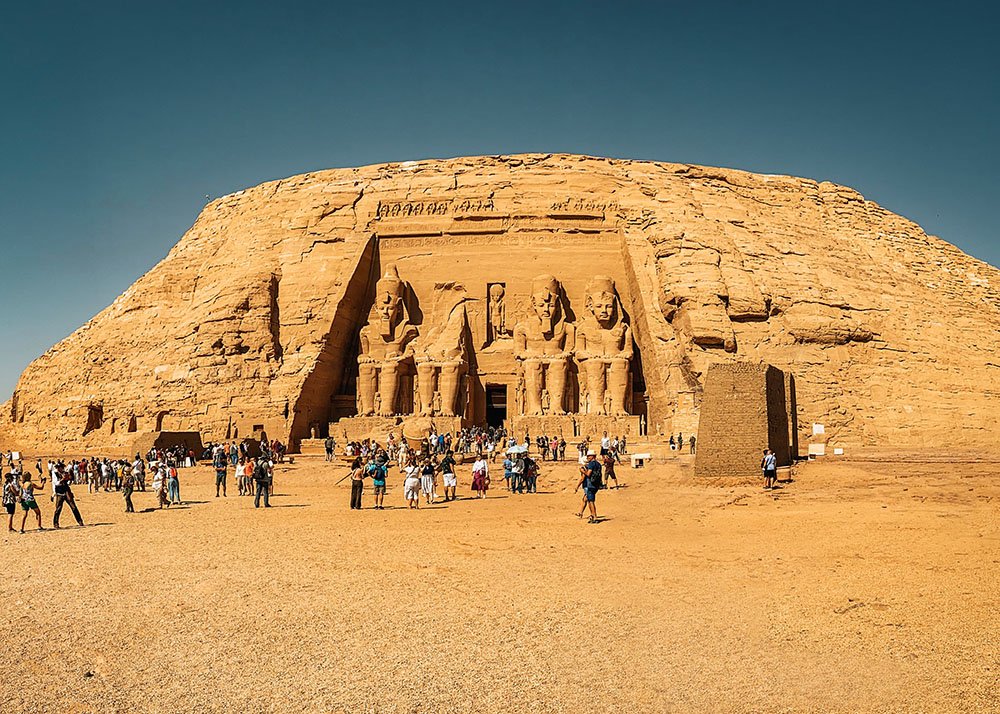
The first thing you’ll notice is the sheer scale. The 33-metre-high facade features four colossal statues of Ramesses II, each around 20 metres tall, with smaller statues of his family carved beside their legs. Above the entrance sits the god Ra-Horakhty, receiving offerings from Ramesses.
Standing underneath them, we almost got sore necks looking up. It’s hard to believe these statues were carved over 3,000 years ago, but what amazed my son even more was knowing they had all been cut into pieces and rebuilt 200 metres away during the rescue of Abu Simbel.
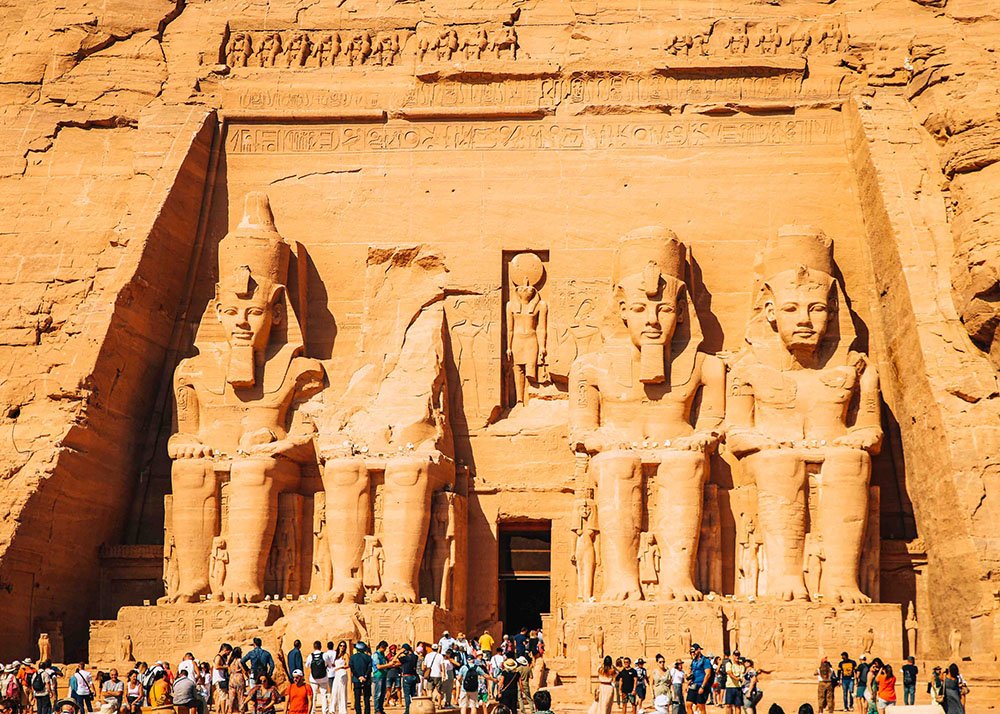
FUN FACT: The second statue is missing its head after an earthquake centuries ago. Instead of repairing it, restorers left the broken pieces exactly where they fell, so you can still see them at the statue’s feet today.
Hypostyle Hall
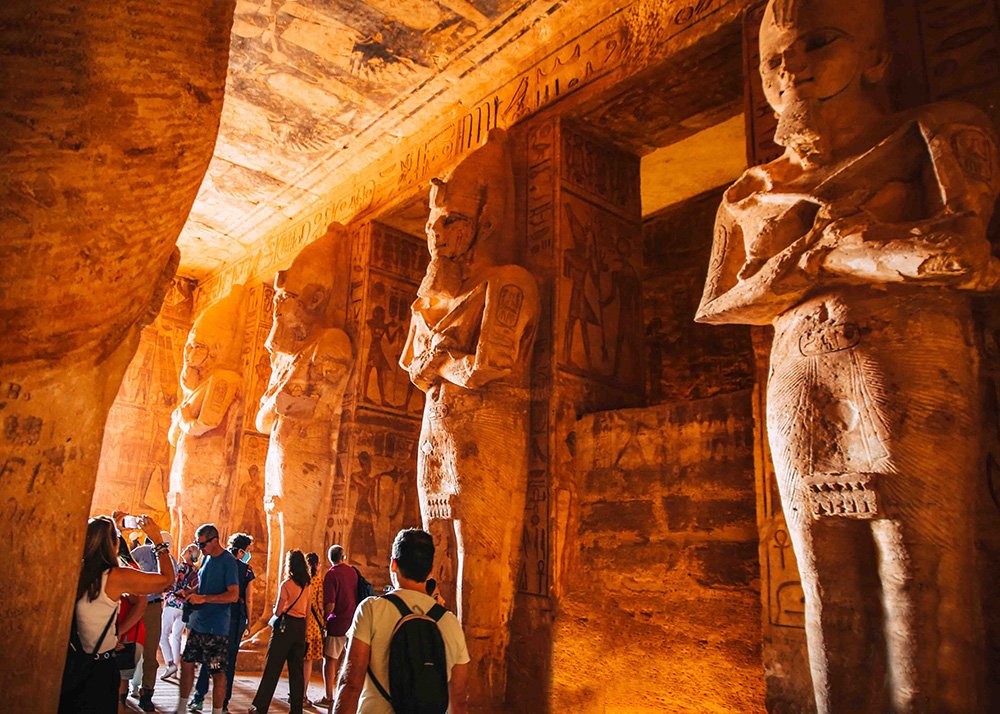
Inside, you’ll enter the Hypostyle Hall, lined with towering Osiris statues and walls covered in reliefs celebrating Ramesses II’s victory at the Battle of Qadesh.
Before we went inside, our guide George explained the carvings using a booklet because guides aren’t allowed into the temples. It completely changed how we explored. Instead of just walking past the walls, my son started pointing out scenes George had described. It turned the carvings into a story rather than just decorations.
Vestibule
The Vestibule contains four pillars decorated with scenes of Ramesses II and Queen Nefertari making offerings to the gods. By this point we found ourselves slowing down to admire the artwork instead of rushing from room to room.
The Sanctuary
At the very back of the temple sits the Sanctuary, once reserved for the pharaoh himself. Four seated statues of Ptah, Amun, Ramesses II and Ra-Horakhty wait in the darkness for most of the year.
Around February 22 and October 22, sunlight reaches all but Ptah, creating the famous Abu Simbel Sun Festival (more on that later, because we were lucky enough to be here for some magic…..).

You’ll need about 45 minutes to an hour to comfortably explore the temple of Ramses II.
Temple of Nefertari and Hathor
A few meters to the right of the temple of Ramses II, you’ll find the Lesser Temple, or Little Temple. I find the first nickname a bit degrading and like the second one better. And that one’s factually true.
The Facade
The 12-metre-high facade features six 10-metre-tall statues of Ramesses II and Queen Nefertari.
What makes this temple so special is that the carvings show Nefertari at the same height as her husband, something that was almost unheard of in Ancient Egypt.
As a mum, I loved pointing that out. It’s a wonderful example to show my son that she held an incredibly important place beside the pharaoh.
And I can imagine this story matters even more if you have daughters.
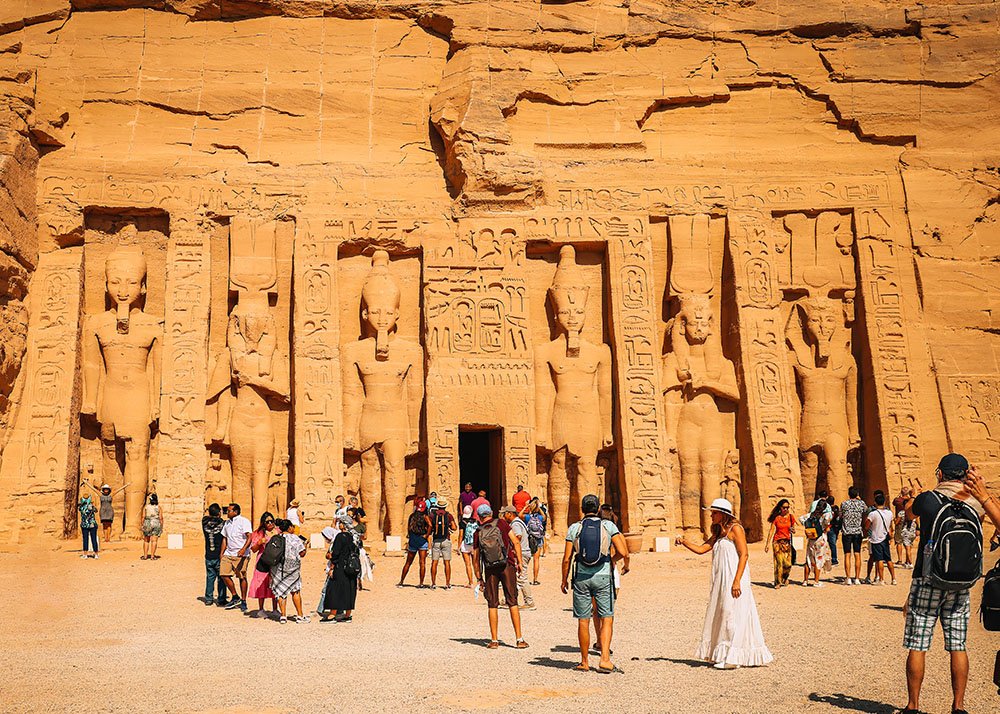
Smaller statues of the royal princes and princesses stand beside their parents, making it fun to see the whole royal family represented together.
Hypostyle Hall
Inside, 6 pillars hold up the Hypostyle Hall, topped with the face of the goddess Hathor and her distinctive cow ears. The walls are covered with colourful reliefs showing Ramesses II and Nefertari making offerings to the gods.
Compared to the larger temple next door, this one felt quieter and a little less overwhelming. We found ourselves slowing down here.
Transverse Chamber
The Transverse Chamber is much narrower than the rooms before it and leads towards the sanctuary. On either side are two unfinished side chambers, while the walls continue the beautiful scenes of offerings to the gods.
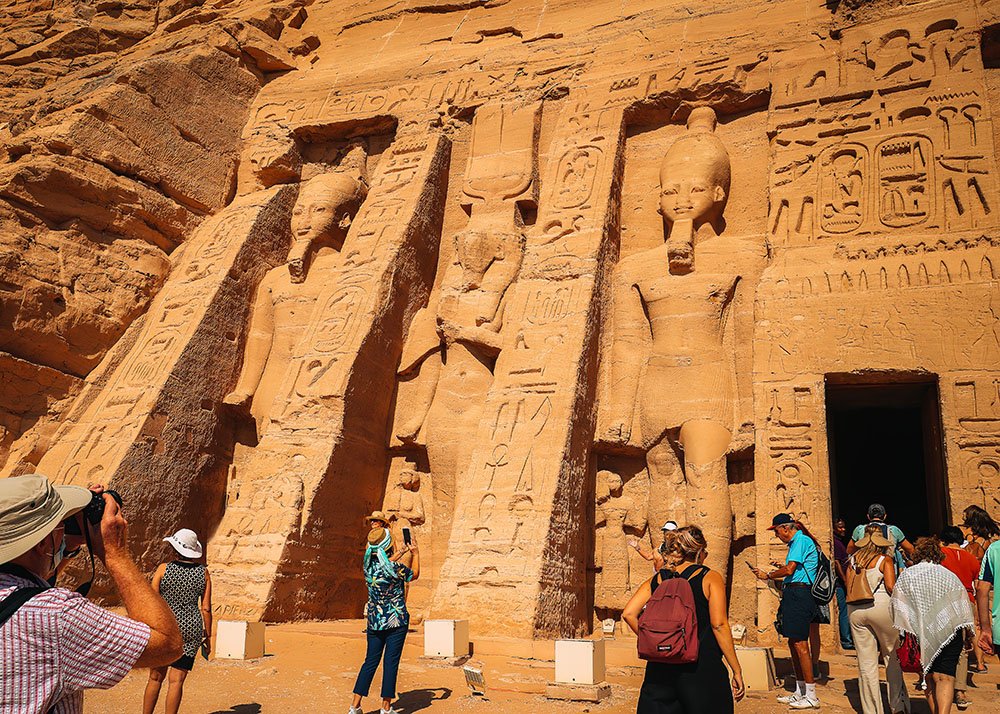
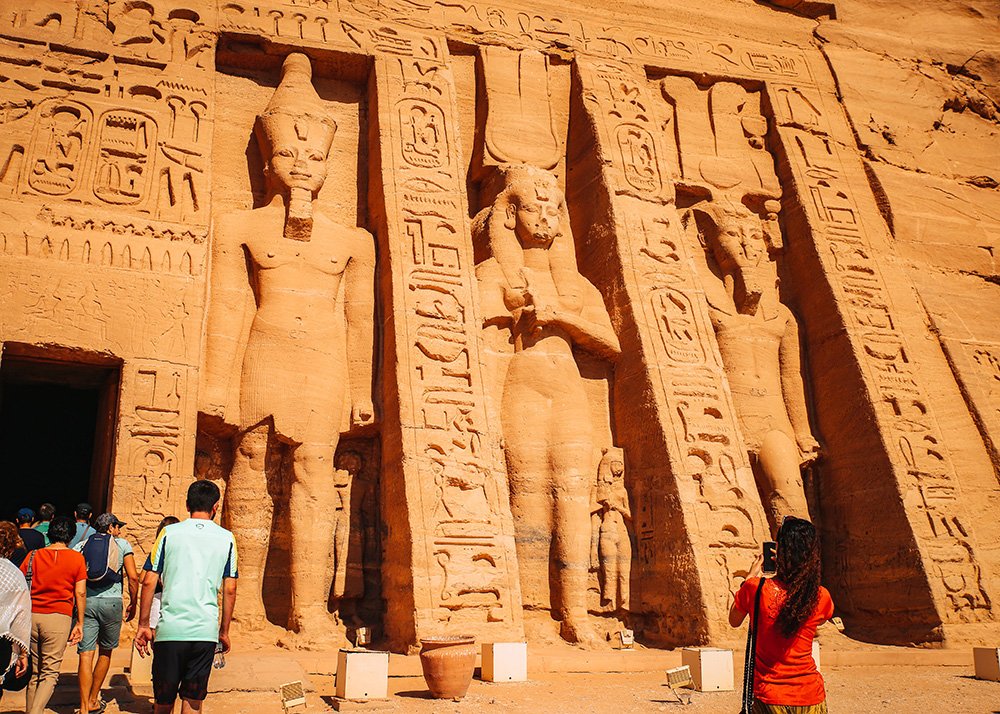
Although this temple is smaller than the Temple of Ramesses II, don’t make the mistake of skipping it. Between the beautiful carvings, the fascinating story of Nefertari herself and the calmer atmosphere, we thought it completed the visit perfectly.
You’ll need around 30 to 45 minutes to explore the Temple of Nefertari.

Abu Simbel Sound & Light Show
Egyptians love sound and light shows at ancient sites. At Abu Simbel the shows run daily, twice a night, at 8pm and 9pm. They last about 45 minutes.
If you’re spending the night in Abu Simbel, this might be a fun experience, but do note that the sounds are very loud. I wouldn’t recommend it if your child is sensitive to sound.
The show officially needs a minimum of 5 foreign visitors, or it might not run. In practice this rule isn’t always strictly enforced, but it’s worth knowing about in case you’re traveling in a small group.
Abu Simbel Sun Festival
I promised to get back to an event at The Sanctuary in Ramesses II, his temple. Here it is.
Twice a year, on the 22nd of February and the 22nd of October a special event occurs.
Builders constructed the temple of Ramses II so that the inner chamber perfectly aligns with the sun on these dates.
In this chamber you’ll find 4 statues sitting next to each other. The statues are of Ptah, Amon, Ramses II and Ra-Horakty.

Originally this event took place on the 21st of February and October. Historians believe Ramses II chose these dates, because we assume that he ascended the throne on the 21st of February and that his birthday is October 21st.
Nowadays, the statues are illuminated in rays of light a day later in both months. Because engineers had to move the temple about 200 meters when Lake Nasser formed with these later dates as a result.
Despite the change in dates, a festival is hosted on these dates to show the people this special occurrence. Crowds of Egyptians travel to Abu Simbel for this special event.
Some travelers even plan their trip to Abu Simbel on one of these dates specifically. The event takes place at sunrise and guests witness the moment when the sunlight illuminates the statues.
After this, everyone heads back outside to watch Nubian dance and live music.
Vendors sell koshary (aka koshari) to visitors. A delicious, but very filling dish with lentil rice, pasta, chickpeas and topped off with tomatoes, fried onions, sambal and vinegar.
You have to book tickets well in advance to attend.
Skip the Crowds and Enjoy the Rays of Light
We visited Abu Simbel on the 21st of October. We had no idea this was the ideal day to visit Abu Simbel. Our guide George told us when we arrived.
While the peak takes place on the 22nd of February and October, 2 days before and after you can also witness this special event.
No festival, less people and still an amazing highlight. Check out the picture above that I took on October 21st.
If you have the option, plan your day trip to Abu Simbel with kids right around the 22nd of February or October.
Is it Safe to Visit Abu Simbel with Kids?
Safety is one of the reasons we opted for a driver and guide to tag along. If, in the worst case, we would be interrogated at checkpoints it would make it a lot easier with a local to see us through it.
We heard that most don’t speak English, so it just wasn’t worth taking the risk. They let us through without checking us, but others were stopped so it’s important to have someone with you that speaks the language.
We didn’t see police anywhere else, only at the checkpoints. So that felt safe, knowing they check everyone coming in and out. I would’ve felt a bit uncomfortable if they were everywhere, since I see that as a sign things might not be safe. Now I just felt a feeling of safety, because it wasn’t overcontrolled. My son felt the same.
Visiting the temples of Abu Simbel with kids is safe. Aside from the usual, “don’t bring your valuables along” that I advise for all destinations.
The most important safety measure: bring enough water, wear and bring extra sunscreen and wear caps and sunglasses. The heat is no joke here!
So is it safe to travel to Abu Simbel right now? Yes, it is, just take heat measures and join a tour or bring someone who speaks the local language.
We would definitely visit the Abu Simbel Temple and the Little Temple again. It was very much worth the trip and the heat.

Abu Simbel with Toddlers and Babies
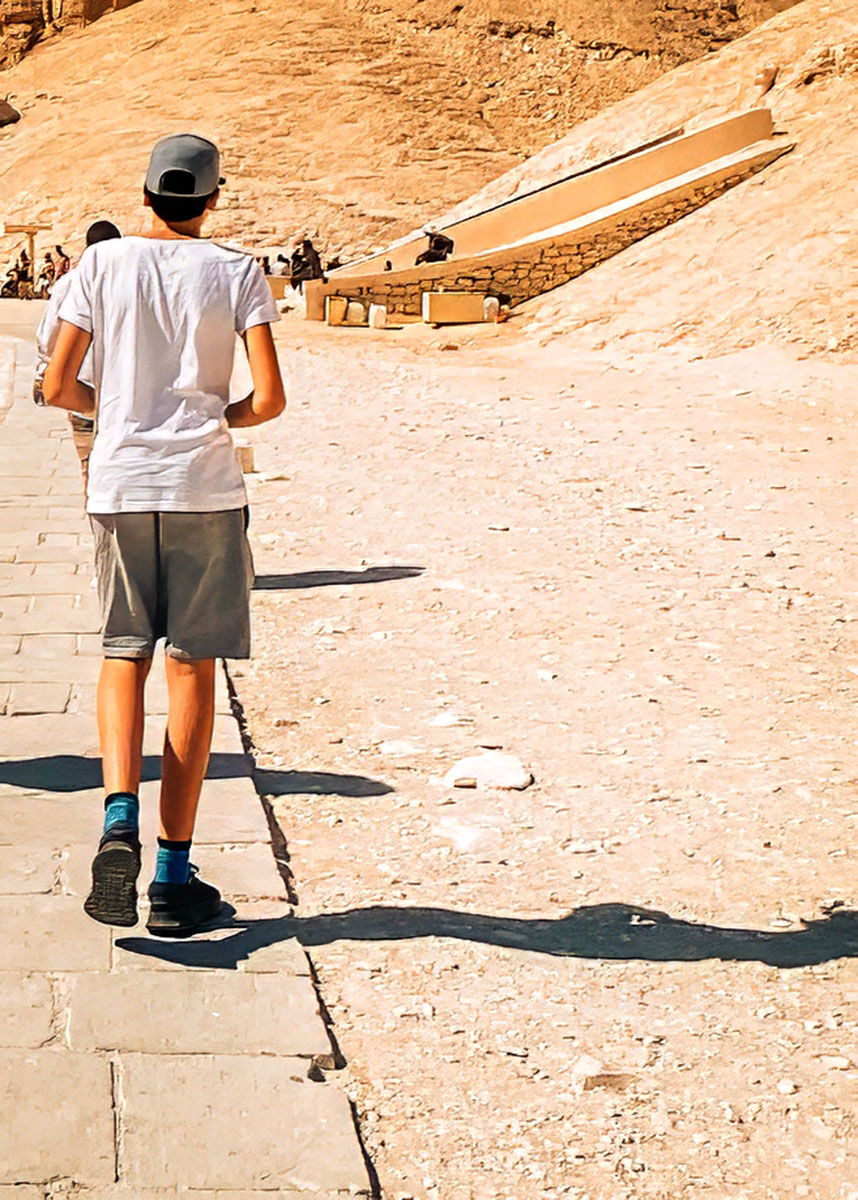
Getting around the site is easy via the paved walkways that take you from the ticket office and the toilet blocks to the sight itself.
Once on site you’re greeted with a sandy and rock filled desert like area. That’s the reason why I don’t recommend bringing a stroller.
After you leave the walkway it gets really bumpy. Bring a baby carrier along if your baby or toddler can’t walk or not steadily enough.
I traveled here with a teen, but I always check what could be useful info for parents with babies and toddlers, so here we go.
There are shops where you can buy some snacks and drinks. But if you need formula, hot drinking water for the milk or diapers, know that you should definitely bring that yourselves.
If you’re traveling here with very young children, I would definitely only come around opening time and leave after about an hour. It’s extremely hot in this area of Egypt.
And also make sure that you book transport with air conditioning. If you can’t I won’t take the risk with the littlest.
Preparing for a trip to Abu Simbel with kids
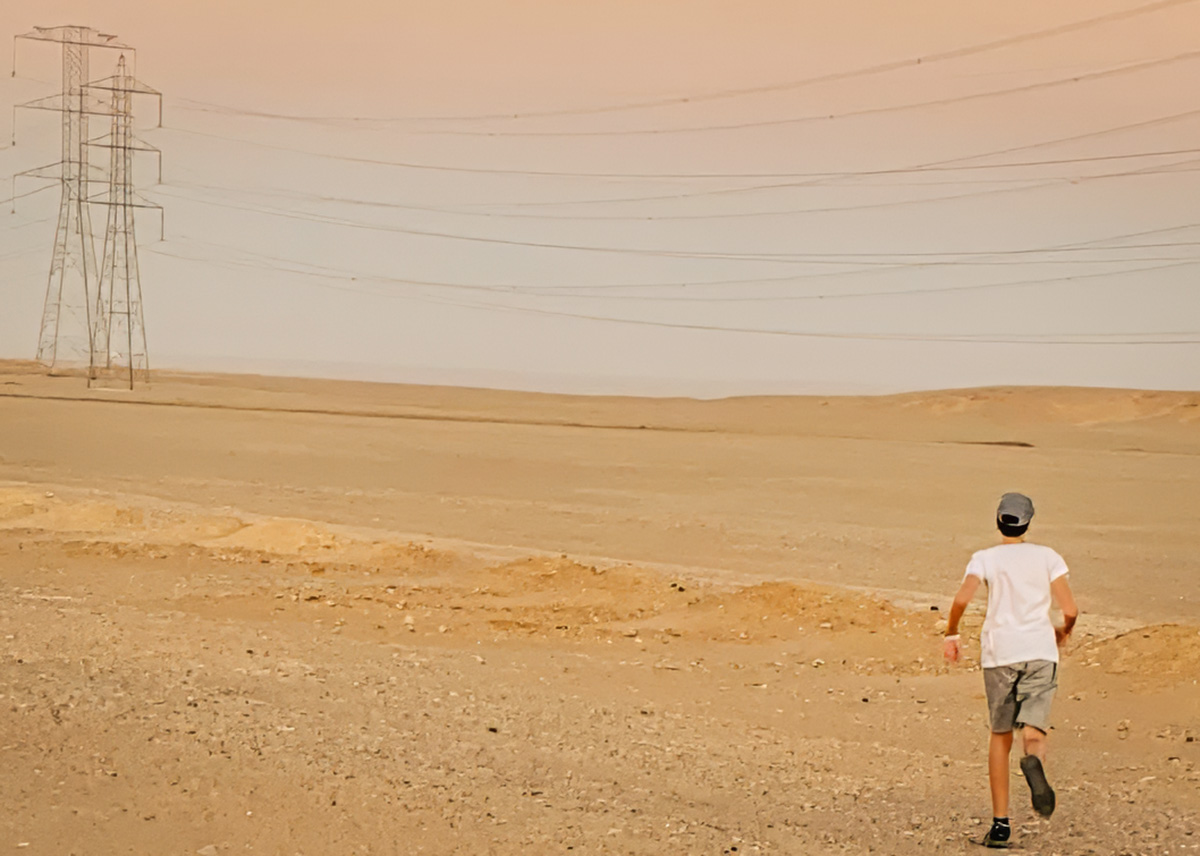
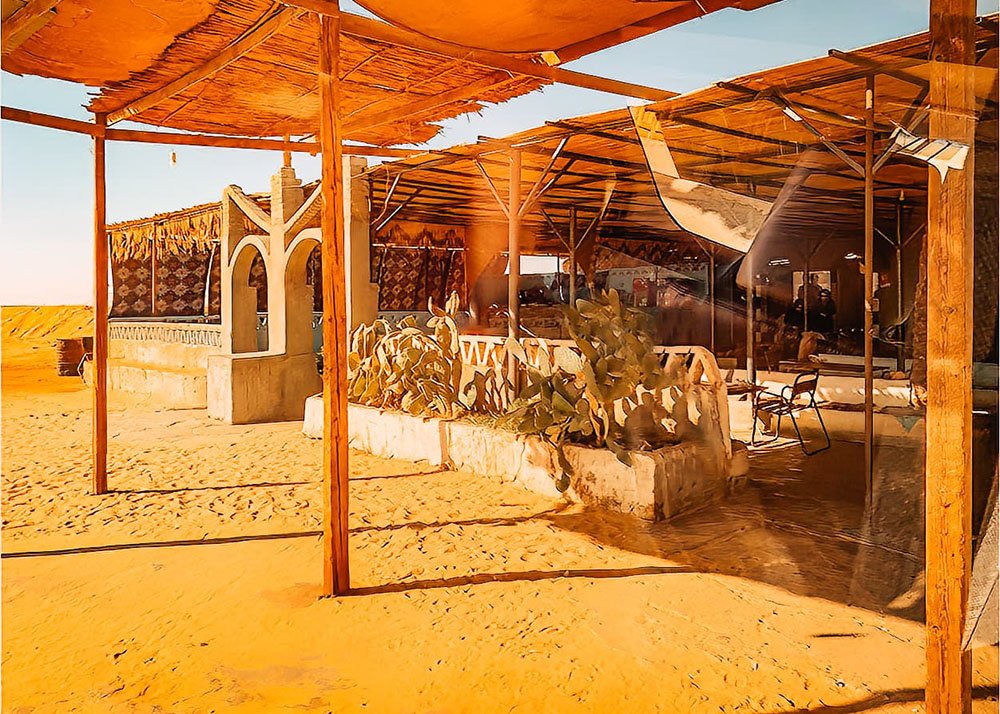
Most people will travel from Aswan to Abu Simbel. Make sure you’ve got some snacks and entertainment in your bag for the 3.5h drive to get there and for the drive back.
You’ll leave in the middle of the night, so a travel pillow is a must.
Driving back will be tough because it’s during the hottest time of day. Bring portable mini fans for the entire family. Just in case the airconditioning in the car doesn’t work well enough or in case there is no aircon.
Clear signage and good pathways make the site easy to navigate, even with children.
While the heat and the early start might be challenging, with a little planning (like packing snacks, water, and sun protection) it will be an awesome experience for the whole family.
Facilities at the Site
You can buy water, other drinks and different snacks at the site. You don’t have to bring it all, but buy it at the entrance, because you won’t get a chance once you’re at the temples.
The same goes for bathrooms. These are located in front of the entrance and again before you exit the site.
Lastly, there is no shade on site! Make sure you apply sunscreen, bring it along on your trip and wear sun caps or hats.
And even then it’s a challenge, my teen loved the temples and the stories, but was very moody because of the heat. We got into an argument about me trying to take pictures of him. Which is why you barely see any shots with him in it 🙂.
Opening Hours and Ticket Info
Abu Simbel opens its gates daily at 6am and closes them at 5pm. If you’re sticking around for the Sound & Light show, note the gap: the show doesn’t start until 8pm, so there’s a 3-hour window where you’re locked out of the site entirely.
Pricing works the same way it does at most Egyptian sites: a cheaper rate for Egyptians and other Arab nationals, and a separate foreigner rate, with students getting a discount on either tier if they show a valid card.
For foreigners the Abu Simbel entrance fee is E£750 (about €13.50/$15 USD) per adult and E£375 (about €6.75/$7.50 USD) per student. Kids under 6 don’t pay at all. These are the fees in 2026.
Abu Simbel Sound & Light Show Tickets
The show runs on a different pricing system entirely, quoted straight in dollars rather than Egyptian pounds. Adults pay $20 (roughly €18.50, or E£1,000), and kids between 6 and 12 pay $11 (about €10, or E£550). These are the fees in 2026.
Joining a Tour to Abu Simbel with Kids
If you want to join a (multi) day tour to Abu Simbel or if you want to join a cruise from Aswan to Lake Nasser I wrote about an Abu Simbel day trip with kids.
Top tours from Aswan to Abu Simbel with kids
Here are some examples of available tours to Abu Simbel from Aswan your family can join.
Best Time to Visit Abu Simbel Temples with Kids
Egypt doesn’t really do four seasons. Talk to anyone who’s spent time here or lives here and they’ll tell you the same thing: it’s mild winter or hot summer, full stop.
Mild winter runs roughly November to April. Hot summer covers May to October. That’s basically the whole forecast.
For Abu Simbel, that distinction matters more than almost anywhere else in the country.
There’s no shade on site, you’re standing on sand and rock in open desert, and the drive there and back adds hours of extra sun exposure before you’ve even reached the temples.
Picking the right window isn’t a nice-to-have here. It’s the difference between a great family day and a rough one.
Mild Winter: November to April
This is by far the best time to visit Abu Simbel with kids, with younger kids maybe even the only option.
Daytime temperatures stay manageable enough to actually enjoy both temples instead of rushing through them.
The early wake-up for the drive still isn’t fun, but at least you’re not adding brutal heat on top of it.
The catch: this is also peak season. Expect more tour buses, more crowds at the facade in the morning, and higher prices for hotels in Aswan and Abu Simbel if you’re staying overnight.
Desert nights also get properly cold, so pack layers, not just sunscreen if you’re staying in Abu Simbel.
Hot Summer: May to October
Let’s be real honest here. We wouldn’t recommend this window with kids. Daytime temperatures at Abu Simbel regularly climb past 40°C, and there’s nowhere on site to escape it.
The upside, if I have to mention something: fewer crowds, lower hotel prices, and you’ll have more breathing room at the facade for photos.
If you do go in summer, lean hard into the early start, bring more water than you think you need, and don’t skip the portable fans we mentioned earlier in this post.
And please, reconsider this season when you have young children, because the heat can be dangerous for them.
Where to Stay When Visiting Abu Simbel with Kids
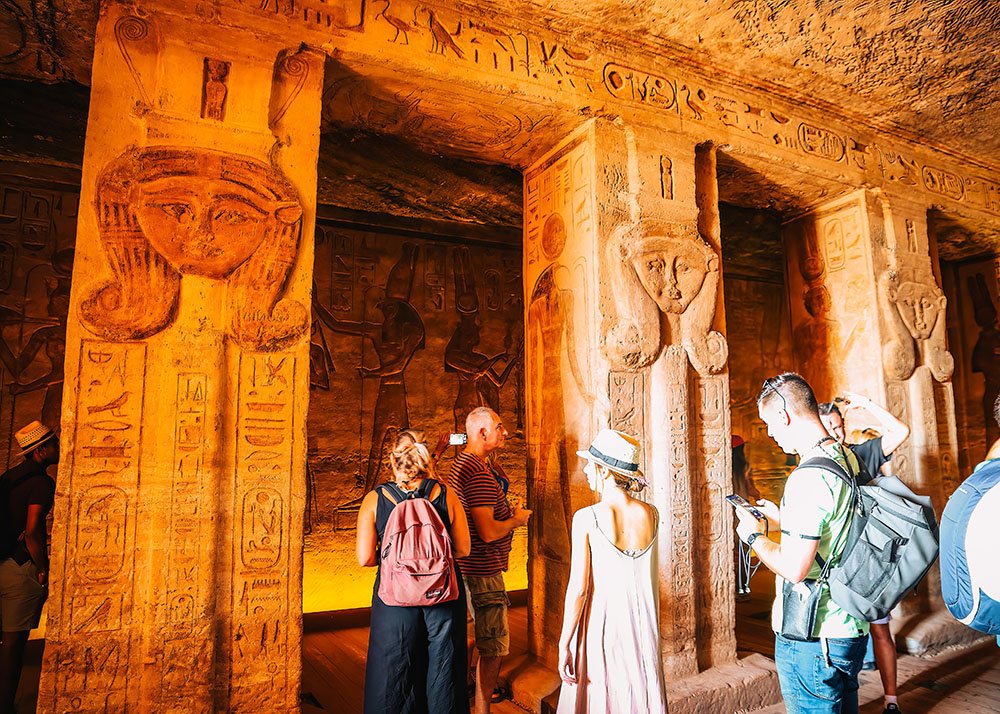
If you want to visit the temples of Abu Simbel in the late afternoon (when the day trip tourists are long gone) and/or want to go to a sound and light show. You need to spend the night in Abu Simbel. While Abu Simbel is a small town, there are a few areas that are well-suited for families.
Staying near the Abu Simbel temples themselves is ideal, as it cuts down on travel time and allows you to easily visit the site at the best times of day. This area is also close to the small selection of restaurants and shops, making it convenient for grabbing a quick bite or picking up any last-minute supplies.
Another option is to stay near the shores of Lake Nasser, where some hotels offer beautiful views and a peaceful atmosphere. Perfect for winding down after a day of exploring.
For families, it’s also worth considering a stay in the more central part of the town, where you’ll find a few mid-range and budget-friendly options. This area offers easier access to local amenities, including markets and cafés.
Whether you choose to stay near the temples, the lake, or in the center, there are several accommodation options that cater to different budgets and preferences, ensuring that your family trip to Abu Simbel is both comfortable and memorable.
Seti Abu Simbel Lake Resort ⭐⭐⭐⭐
Price: €€€ | Area: Near the Abu Simbel Temples | Check Ratings
The Seti Abu SImbel Hotel (Lake Resort) is known for its stunning views of Lake Nasser, Seti Abu Simbel Lake Resort offers luxury accommodation with a prime location close to the temples.
Parents will appreciate the spacious rooms and the beautiful, serene setting, which provides a relaxing retreat after a day of sightseeing.
The resort’s large swimming pool and lush gardens make it an excellent choice for families with kids who need space to play and unwind.
Tuya Hotel
Price: €€ | Area: Near the Abu Simbel Temples | Check Ratings
Tuya Hotel is renowned for its top-notch service and modern amenities, all within walking distance of the iconic temples.
This hotel is perfect for parents looking for a comfortable, upscale stay with easy access to the main attractions. The family-friendly environment, complete with a restaurant that serves both local and international cuisine, ensures that everyone, including picky eaters, is well taken care of.
New Abu Simbel Tourist Hotel
Price: €€ | Area: Central Abu Simbel | Check Ratings
New Abu Simbel Tourist Hotel opened its doors not long ago, and it shows in the best possible way. The rooms are spotless, the Nubian decor is genuinely beautiful (not the generic kind), and the whole place still has that fresh, just-built feel.
It’s a short drive or tuk-tuk ride from the temples, so you’re not stuck walking through the heat with tired kids in tow.
What makes this one stand out for families isn’t just the rooms, it’s the owner and his team. They’ll arrange your temple tickets, sort out the sound and light show, organize a sunrise boat trip on Lake Nasser, and basically take half the logistics off your plate before you’ve even unpacked.
Kabara Nubian House ⭐⭐
Price: €€ | Area: Near Lake Nasser | Check Ratings
Kabara Nubian House is a midrange hotel, offering clean and affordable rooms with a courtyard filled with herbs and a good restaurant where you can get lunch and dinner.
This guest house is ideal for families who prefer a more personal and homey experience. The relaxed atmosphere and great food (the tajine is awesome and my son loved the omelette) make this a great place to stay where kids can play outdoors, and parents can enjoy some downtime without the crowds.
How to Get to Abu Simbel
Getting to Abu Simbel with kids can be done in multiple ways.
Aswan, Cairo, and Luxor each connect to Abu Simbel, but not in the same way or with the same ease. Picking the right route depends on where your Egypt trip starts and how much travel time you’re willing to spend getting there.
Visiting Abu Simbel by Plane
From Aswan
This is the easiest and most established route. Air Cairo and EgyptAir both fly the 45-minute hop between Aswan and Abu Simbel multiple times a day, which makes it the obvious choice if your family is short on time or not up for a 3.5-hour desert drive each way.
From Cairo
You can fly from Cairo to Abu Simbel, but right now every route includes a layover in Aswan. Some listings advertise it as a “direct” flight, but in practice you’ll touch down in Aswan first before continuing on.
Total travel time ends up closer to 2.5 to 4 hours once you factor in the stop, so budget your day accordingly.
There are plans for a true nonstop Cairo to Abu Simbel route, but it’s brand new and still finding its footing. If you’re done exploring Cairo with kids and ready to book a flight to Abu Simbel make sure to check if a direct flight is an option, because that will definitely shorten your travel time.
From Luxor
There’s no direct flight between Luxor and Abu Simbel. If you want to fly the whole way, you’ll need to backtrack through Cairo first, then on to Aswan, then finally to Abu Simbel.
It’s technically possible, but between connections and layovers you’re looking at 10 to 15 hours of travel, which is a lot to ask of kids for a destination you could reach more directly by other means.
Visiting Abu Simbel on a Nile River Cruise
The most common way to combine Luxor and Abu Simbel into one trip is by cruise ship. Most families join a 5-day Nile Cruise from Luxor to Aswan and book the Abu Simbel excursion at the same time as the cruise itself.
Visiting Abu Simbel by Land
From Aswan
A day trip from Aswan to Abu Simbel by car or organized tour is the standard way to do this from Aswan, and it’s what most families end up choosing.
It’s the option we went for, and with a teen and air con in the car it was very much doable.
From Luxor
Doing this by land from Luxor is possible, but you’re looking at a 14 to 16 hours round trip.
It’s exhausting for adults, and even more so for kids, but it is doable if a day trip is genuinely your only option.
Most travelers, though, end up choosing a 2-day trip from Luxor instead.
These start from your hotel in Luxor, sometimes partially by train, sometimes entirely by car or tour bus. And almost always include stops at Edfu, Kom Ombo, or other Aswan sights along the way.
If your family is short on time but still wants to see more than just Abu Simbel, this is the version that gives you the most for two days.
Best Abu Simbel Day Trips from Luxor
Best 2-Day Abu Simbel Trips from Luxor
History of Abu Simbel
I’ll get into the things to see in Abu Simbel more in depth later in this post. But let’s share more about the history of Abu Simbel first.
Let’s start with some fun facts about Abu Simbel. Starting with the man that made the temple complex possible, Ramses the Great. The nickname for Ramses II.
People also called him the Builder Pharaoh, since he didn’t only order the building of Abu Simbel, but also Khonsu’s temple at Karnak and the Ramesseum in Thebes and 100s of other buildings and add-ons to existing complexes.
Explorers discovered the temples in 1813. Though they date back to the 13th century BC, when builders spent 20 years carving them into the cliffside. Builders carved both temples out of the mountainside at the second cataract of the Nile river.
It now sits on a plateau of cliffs about 200 meters away from the original location. I’ll get to this later in this article.
The Great Temple belongs to Ramesses II, but it also honors the gods Re-Horakty and Ptah. One of the reasons why Ramses II created this temple is to celebrate his victory over the Hittites at the battle of Qadesh in 1274 BC.
Ramses II built it in Nubia as a symbol of Egypt’s power.
The Small Temple is called the Temple of Hathor. Ramses II built it to honor his chief queen and favorite wife Nefertari and the god Hathor.
Discovery of Abu Simbel
The name of the temple complex, Abu Simbel, is not the name Ramses II gave it. It was named after the boy who led a Swiss explorer, Johann Ludwig Burckhardt, to the site in 1813.
Burckhardt wasn’t the one that excavated the place. That was Giovanni Belzoni, an Italian explorer, who looted Abu Simbel in 1817.
Belzoni named it after the boy who led Burckhardt to the temples. Unfortunately, the original name for the complex, if it had one, has been lost.
Why was Egypt’s Abu Simbel Moved in the 1960s?
In the 60s of the last century Egypt built the Aswan High Dam to end the flooding of the Nile River and bring more hydro-electrical power to the country.
It indeed ended the flooding and created sustainable electricity across the country. Furthermore, it resulted in more arable land.
However, it also resulted in a giant reservoir of water, now known as Lake Nasser. Egypt named the lake after the president who ordered the High Dam’s construction.
The sudden appearance of this lake led to the relocation of tens of thousands of Egyptians and Nubians, with some estimates putting the number above 100,000.
Besides the fact that thousands of people had to leave their homes, around 20 ancient Egyptian and Nubian sights faced ruin.
Engineers had to move them, and because Abu Simbel sat right next to the newly formed Lake Nasser. So engineers knew it would submerge first.
UNESCO’s Nubian Campaign
In the 1960s UNESCO, with the help of many other countries all over the world, started a rescue mission. In 1963 UNESCO formed a plan to break down both temples of Abu Simbel and move them to their current location to rebuild them there.
It was a huge undertaking, not only the moving and rebuilding itself, but also the recalculating of the measurements needed to let the sun shine into the sanctuary of the gods in February and October.
The Abu Simbel relocation finished in 1968, now considered one of history’s greatest archaeological engineering challenges
If you want to know more about the move and see how they did it, don’t skip a visit to the visitor’s centre on site. Here you can watch a movie about the move and read all about this huge undertaking.
10 Facts About Abu Simbel for Kids
- Abu Simbel is named after the boy that found the temples in the beginning of the 1800s
- Ramses II ordered the construction of the 2 temples of Abu Simbel
- Abu Simbel had to be moved in the 1960s to prevent it from ruin after the build of the Aswan High Dam and the formation of Lake Nasser
- The dismantling and reassembly of the Abu Simbel temples took 4 years (1964-1968)
- The temple of Ramses II in Abu Simbel is the largest temple in ancient Nubia
- Abu Simbel is located about 40km from the border with Sudan
- Abu Simbel is the 2nd most visited UNESCO World Heritage Site in Egypt, after the Great Pyramids of Giza
- While there are a few statues and structures built to honor important women and female goddesses in Egypt, only 2 temples honor a woman. Hatshepsut’s Temple in Luxor and the Temple of Hathor for Nefertari
- The Grand Temple aligns with the sun. Light is passing through the temple at some dates in February and October. These seasons represent the birth and coronation of King Ramses II
- The Great Temple honors Ramesses II, but also the sun gods Amon-Re, Ptah and Re-Horakte. The Small Temple honors Queen Nefertari, but also the god Hathor.
FAQ
Don’t have time to read this article? No worries, I’ll answer some faq about planning a trip to Abu Simbel with kids.
Where are the Abu Simbel temples located?
The Abu Simbel temples are located in the far south of Egypt, 40km from the border with Sudan.
The temples are about 230km southwest of Aswan, which is the nearest major city.
Is a trip to Abu Simbel worth it with kids?
Absolutely, visiting Abu Simbel with kids is totally worth it! The sheer size and beauty of the temples will leave them in awe.
While the journey might be a bit long and you have to take measures to fight the heat, especially with younger kids, the reward at the end are temples full of fascinating details.
What’s the best time to visit Abu Simbel with kids?
Aim for November through April if you can. Egypt really only has two seasons, mild winter and hot summer, and Abu Simbel’s lack of shade makes that distinction matter more here than almost anywhere else in the country. Winter means manageable daytime temperatures and an early start that doesn’t feel brutal on top of the heat, though it’s also peak season, so expect more crowds and higher hotel prices.
Can I bring a baby or toddler to Abu Simbel?
Yes, but plan around the terrain rather than the journey itself. The walkways from the entrance to the temples are paved and stroller-friendly, but once you’re past them a baby carrier works better than a stroller.
Bring extra water and sun protection, since there’s no shade anywhere on site, and factor in that the early departure and long drive can be tough on a toddler’s schedule even before you’ve reached the temples.
Is Abu Simbel stroller friendly?
The pathways to, from and around the temples are stroller-friendly.
But the sandy and rocky area towards the entrances of the temples and especially the entrances to the temples themselves, involve steps or uneven ground where you’ll need to carry the stroller or fold it up temporarily.
Inside the temples, the space can be tight, and the floors are uneven, so it might be more practical to use a baby carrier if you have a very young child.
Is there food available at the Abu Simbel temples?
Yes, there is food available at the temples of Abu Simbel, but options are somewhat limited.
Near the entrance to the temple complex, you’ll find a small café where you can grab some snacks, light meals, and refreshments.
The cafe offers basics like sandwiches, pastries, and drinks, which can be a lifesaver if you’re traveling with hungry kids.
Are there bathrooms at Abu Simbel?
Yes, there are bathrooms at Abu Simbel, near the entrance.
Is it worth staying overnight in Abu Simbel?
Staying overnight in Abu Simbel can be a fantastic experience, especially if you’re traveling with kids.
It allows you to visit the temples at the best times of day, early in the morning or late in the afternoon, when the light is beautiful, the heat is less intense, and the crowds are thinner.
Plus, staying overnight gives you the chance to go to the Sound and Light Show at the temples in the evening.
Ready to Make Abu Simbel Part of Your Egypt Trip Itinerary?
Abu Simbel isn’t just another temple complex. It’s a must-see destination that combines monumental history, breathtaking architecture, and a powerful lesson in cultural preservation.
Planning your visit well can make all the difference, especially when you’re traveling with kids.
Whether you’re spending the night or just making a quick stop, the right preparation will help turn a long desert drive into one of the most memorable highlights of your Egypt family trip itinerary.
👉 Prefer a shorter visit? If you’re planning to see Abu Simbel as a day trip from Aswan, don’t miss my guide:
How to Plan a Day Trip to Abu Simbel from Aswan with Family is packed with practical tips on transportation, timing, and how to make the most of just a few hours at this unforgettable UNESCO site.
Make the journey count! Your kids will thank you for it.
Did you enjoy Planning a Family Trip to Abu Simbel: Things to Know Before You Go?
If so, read more about family travel in Egypt:
- 3-Week Egypt Itinerary for an Epic Egypt Family Road Trip
- Nile Cruise with Kids
- 10 Things to Do In Cairo with Kids
- 13 Things to Do In Aswan with Kids
- Planning a Family Trip to Aswan: Things to Know Before You Go
- 10 Things to Do In Luxor with Kids
- 13 Best Ancient Egypt Sites to Visit with Kids
- How to Plan a Day Trip to Abu Simbel from Aswan with Family
- Planning a Family Trip to Abu Simbel: Things to Know Before You Go
Pin for Later