12 Best Things to Do In Kakadu NP with Kids

If you’re mapping out your Northern Territory road trip and wondering whether Kakadu National Park is really worth the detour with kids, spoiler alert: it absolutely is.
There are so many things to do in Kakadu with kids that you could easily spend a week here and still feel like you’ve only scratched the surface.
This isn’t one of those “check it off the list” national parks. Kakadu is a place where ancient stories are painted on cave walls, crocodiles rule the billabongs, and plunge pools wait for you at the end of a hike.
With 20,000 square kilometers to cover and a week’s worth of things to do, knowing where to start is half the battle.
When we visited with our boy, it became one of the most precious travel memories we’ve ever made. So we revisited Kakadu a few years later.
From camping under star-strewn skies to spotting wallabies at dusk and learning from Bininj and Mungguy culture, this UNESCO World Heritage Site has it all.
And yes, there are plenty of family-friendly walks and swims that don’t require hardcore hiking skills. Even our 10-year-old non-hiker needed zero convincing once we mentioned a waterfall swim at the end.
These are 12 of the best Kakadu activities for families, including itineraries for 2, 3 and 4 days. Complete with a sprinkle of history, practical tips and personal recs, so your trip can be as well-planned as possible.
No Time to Read?
Save on Pinterest and read this article later!


Why Kakadu National Park is a great choice for a family visit
Kakadu National Park is one of the best places to visit in Australia with family. It’s nature in its most untouched form. This world heritage listing is only a 3 hour drive from the city of Darwin. Kakadu is raw, majestic, wondrous and highly spiritual.
You can spot lots of wildlife together. Which kid doesn’t want to spot salties (saltwater crocodiles) and wallabies? And what about the rock art I mentioned?
Even the youngest kids will be in awe of all the art on the cave walls. One or more of your kids isn’t a hiker? They’ll be easily persuaded with the promise of a swim in one of the many waterholes and near waterfalls. This amazing place offers incredible outdoor activities you can discover together as a family!
When traveling to Australia with your family Kakadu is one of the most beautiful national parks you can visit. So if you’re in Northern Territory and Kakadu isn’t on your list yet, fix that.
When traveling to Australia with your family Kakadu is one of the most beautiful national parks you can visit. So if you’re in Northern Territory, don’t miss your chance!
Top tours in Kakadu NP with kids
Tour packages
If you want to explore Kakadu on a day tour from Darwin, there are multiple tours on offer. You can easily book one of these tour packages online. Check them out and find the one most suitable to you and your family.
Best 12 Things to Do In Kakadu National Park with Kids
From cultural stops to plunge pool swims, and from crocodile sightings to beautiful hikes, here’s what we did, what we loved, and what you shouldn’t skip.
1. Bowali Visitor Centre

Your first stop in Kakadu should be Bowali Visitor Centre, right on the Kakadu Highway just outside Jabiru. It sounds unglamorous, I know. But hear me out.
This is where you pick up current road conditions, find out which sites are open, and get your kids a copy of the Kakadu Kids Guidebook (or download it here). That last one is worth the stop alone. It turns the whole park into a scavenger hunt for younger kids and keeps them engaged from day 1.
The center also gives you a solid introduction to the park’s ecosystems, wildlife, and the culture of the Bininj and Mungguy people.
Rangers are there to answer questions, and they know this park better than anyone. Starting here will make your time here a lot easier.
One more thing: this is also where Marrawuddi Arts and Culture is located, which is stop number 3 on this list. You can tick both off in one visit.
Best Time to Visit
The dry season, which runs from April to October, is the best time to visit. The centre is fully staffed, rangers are running programs, and you’ll get the most up-to-date info on which trails and waterholes are accessible.
If you’re visiting in the wet season (November to March), it’s still worth stopping in, but hours are shorter and some of the park will be off-limits, so manage your expectations before you head out.
Opening Hours and Ticket Info
Bowali is open daily, except Christmas Day and New Year’s Day.
During the dry season you can walk in any time between 9.00am and 5.00pm. In the wet season the centre opens a little later and closes earlier, from 10.00am to 4.00pm.
Entry is free, and you can also buy your park pass (more on that later) here if you haven’t already picked one up on the way in.
2. Warradjan Aboriginal Cultural Centre

We highly recommend you visit the Warradjan Cultural Centre. This centre is built on land owned by the Murumburr clan and is developed by the Bininj and Mungguy people.
Here you can find the necessary information about local Aboriginal culture and gain understanding about the connection of the Bininj and Mungguy with Kakadu.
You can’t take any pictures inside, but take my word for it when I say that we learned a lot from our visit. You’ll find tools that were once used and still in use on display. And storytelling via art and video.
In the dry season cultural experiences are scheduled here, and artists sometimes give live weaving and painting demonstrations. Worth timing your visit around if you can.
In the gift shop you’ll find arts, crafts, books and clothing made in Kakadu and Arnhem Land. We got some art here to take home as a keepsake of your trip.
Best Time to Visit
Dry season (April to October) is when you’ll get the most out of your visit. Cultural activities are scheduled, artists sometimes give live demonstrations, and the gift shop is fully stocked.
If you’re here in the wet season (November to March), the center is still open and still worth visiting, but the program is scaled back and some activities won’t be running.
Opening Hours and Ticket Info
The centre is open every day of the year. In the dry season (April to October) doors open at 9.00am and close at 5.00pm.
In the wet season (November to March) hours are shorter, from 9.00am to 3.00pm.
Entry is free, and the gift shop accepts both cash and card.
3. Marrawuddi Arts and Culture Centre

If you’re spending time in or near Jabiru, Marrawuddi Arts and Culture Centre is worth adding to your list.
You’ll learn about the different takes on life and culture, because this not-for-profit gallery is owned and governed by the Mirarr Traditional Owners and supports over 500 artists from Kakadu and West Arnhem Land.
You’ll find paintings, weavings, screen-printed textiles, photography and sculpture, all made locally and all ethically sourced. Nothing mass-produced. Nothing you’d find in an airport gift shop.
For kids it’s also a genuine conversation starter about the stories and culture behind the art. And if you need a coffee after a morning of exploring, the cafe here is genuinely good. Real talk: one of the better cups you’ll find in the park.
Marrawuddi is a member of the Indigenous Art Code, so you can buy here knowing your money goes directly back to the artists and the community.
Best Time to Visit
Weekday mornings during the dry season (April to October) are your best bet. That’s when artists are most likely to be working in the studio and the gallery is at its fullest.
Weekends are still good, just with slightly shorter opening hours.
If you’re visiting in the wet season, check ahead as community events and sorry business can sometimes mean unexpected closures.
Opening Hours and Ticket Info
Marrawuddi is open Monday to Friday from 8.00am to 4.00pm, and on weekends from 8.00am to 2.00pm.
Entry to the gallery is free.
4. Yellow Water Cruise

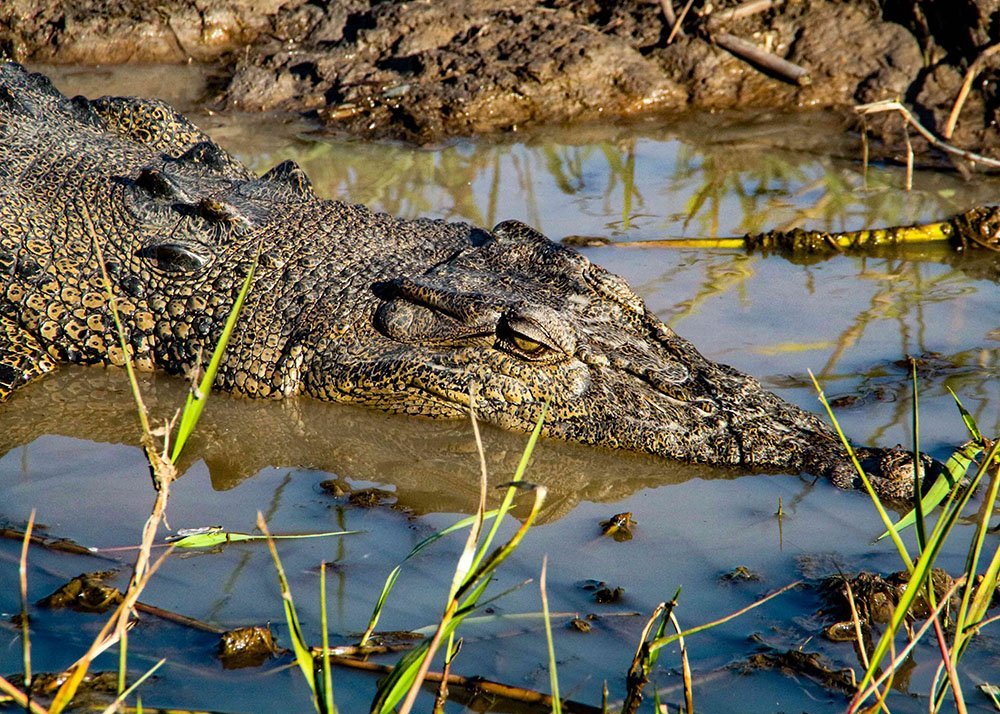
Cruising Yellow Water, known as Ngurrungurrudjba, Yellow Water Billabong is without a doubt the best thing to do in Kakadu. We loved it and often refer to it as one of our all time favorite activities ever.
Imagine stepping on the boat and immediately spotting crocs swimming around and chilling on the riverside. No wonder that the first thing the guide will tell you is to keep your arms, legs and head inside of the boat at all times.
After the first few minutes of spotting dozens of saltwater crocodiles you’ll find that you finally have time to take the entire scenery in and WOW! Everywhere you look there are flocks of birds, beautiful and huge trees that have stood there for centuries, wallabies hiding in the shade and wild horses running around.
And don’t forget to look at the water, it’s covered with beautiful pink and white waterlilies!

We really wanted to see the sunset over the wetlands. It was one of the most magical moments of our lives. Everyone on the boat was silent and the captain stopped the boat to give us the chance to admire not only the view, but also nature’s noises.
Book the sunset cruise. It’s the one worth planning your entire day around.
Kakadu Tourism, an Indigenous-owned business, runs the cruise, and guides are a mix of Bininj and non-Indigenous locals who know this country inside out.
Best Time to Visit
The sunset cruise runs year-round, except Christmas Day, and each season offers something different.
The dry season (April to October) is the most comfortable for families, with calmer waters and cooler temperatures.
That said, the wet season has its own drama: lush green floodplains, dramatic skies, and fewer crowds on the boat.
If you’re visiting in the wet season and conditions allow, don’t skip it.
Opening Hours and Ticket Info
The sunset cruise departs at 4.30pm and runs for 2 hours. Book well ahead, especially in peak dry season. This experience is typically booked out days in advance, so don’t leave it until you arrive in the park.
You can book directly through Kakadu Tourism or try your luck and pick up tickets at Cooinda Lodge if spots are still available.
The shuttle from Cooinda Lodge to the dock is included in your ticket price and takes about 10 to 15 minutes.
Yellow Water Cruise Prices
| Cruise Time | Adult | Child (5‑15) | Infant (0‑4) |
|---|---|---|---|
| Sunrise / Sunset (2 hr) | $130 AUD (about €79/$92 USD) | $90 AUD (about €55/$64 USD) | Free (on lap) |
| Morning (9 a.m., 2 hr) | $105 AUD (about €64/$75 USD) | $75 AUD (about €46/$53 USD) | Free (on lap) |
| Midday (11:30 a.m / 1:15 p.m, 1.5 hr) | $105 AUD (about €64/$75 USD) | $75 AUD (about €46/$53 USD) | Free (on lap) |
2026 prices from Yellow Water Cruises (Kakadu) via kakadutoursandtravel.com.au.
Top Yellow Water Billabong Tours in Kakadu
5. Bird Spotting in Kakadu


Kakadu is home to 290 species of bird. It has been voted Australia’s number one birdwatching destination by Australian Geographic for many years in a row.
You can spot lots of them in Yellow Water Wetlands, but don’t stop birding there. They are everywhere in Kakadu and it is a birdwatcher paradise.
Bird Species
You can find the most common bird species here, but also some rare ones. A few examples are the pictured black necked stork, azure kingfisher and the white-bellied sea eagle.
And what about the stately brolgas and the tiny and cute comb-crested Jacanas, strutting their stuff on top of the waterlilies. You can find them all in Kakadu and much much more!

Kakadu Birds App
Isn’t this activity a bit dull for the kids? Nope, because there’s an app and it’s called Kakadu Birds.
It’s a great educational tool to find out more about some of the most popular bird species hanging out in this national park. You can hear their sounds and find out where you have the best chances of spotting them.
It will feel like a hunt to them and it will keep them entertained during hikes, bushwalks and while on a Yellow Water Cruise.
Best Time to Visit
Late dry season, from August to October, is when Mamukala is at its most spectacular. As the surrounding wetlands dry up, tens of thousands of birds flock to the remaining water. It’s genuinely one of the most impressive wildlife displays in the park.
Early dry season (April to June) is also good, just with fewer birds.
In the wet season the loop walk closes due to rising water levels, but the bird hide itself may still be accessible. Check the Kakadu Access Report at kakadu.gov.au before heading out.
Opening Hours and Ticket Info
Mamukala Wetlands is open during the dry season and access to the bird hide is free. No booking is needed.
Always check the Kakadu Access Report before visiting, as seasonal flooding can affect access.
TOP TIP: If bird spotting is your thing, don’t leave the South Alligator region without stopping at Mamukala Wetlands. It sits right on the Arnhem Highway on your way into the park from Darwin, so there’s no excuse to skip it.
There’s a shaded, wheelchair-friendly bird hide right at the water’s edge. You don’t need binoculars, you don’t need to be quiet about which bird is which, and you definitely don’t need to drag your kids on a long walk first. Just show up and watch. Magpie geese, jacanas, egrets, whistling kites and more, all within easy viewing distance.
If you’re up for it, there’s also a 3km flat loop walk around the wetlands. Pack insect repellent if you do, the mozzies are real.
6. Burrungkuy (Nourlangie): Rock Art and Walks

Better known as Nourlangie, Burrungkuy is worth a visit for 2 reasons. First and foremost this is an amazing place to explore all the rock art that has been painted on the cave walls up to 20,000 years ago.
And secondly because after checking out the rock art a small hike up the Nourlangie trail will reward you with views for miles over Kakadu, standing at the Nawurlandja lookout.
Rock Art
There are 2 main places in Kakadu NP where you can check out rock art. Burrungkuy and Ubirr. We’ve visited both and loved them equally.
But if you only have time to visit one of them I recommend Burrungkuy (Nourlangie). Just so you can combine your visit to the ancient art gallery with a short hike up the trail.
You’ll find different kinds of paintings here. There are some that everyone was allowed to paint. Usually of animals or objects they used. But some scenes could only be painted by people with knowledge of the subject.

For instance, only people with knowledge about magic could paint anything regarding sorcery. Or historical paintings that could only be made by elderly who lived to tell.
If you want to go deeper into the stories behind the art, local Bininj guides run a 2-hour rock art tour at Burrungkuy.
It’s a 2 hour walk with a guide who’ll explain the cultural and family stories behind the paintings in a way no sign or audio guide can match.
Worth every minute if your kids are curious and engaged. And I think that it’s hard to find a kid who doesn’t want to hear more about the lives of people that lived here thousands of years ago.
No interest in a guide, but in need of background info? You can download a guide to rock art in Kakadu.
There’s a quieter alternative nearby worth knowing about: the Nanguluwurr art site. It sees far fewer visitors than the main Burrungkuy circuit and features some remarkable paintings including an extraordinary image of a European sailing ship, painted 90km from the sea.
Walks
Anbangbang Billabong
Just a short, flat walk from the main rock art circuit, Anbangbang Billabong is one of those spots that sneaks up on you. It’s calm, beautiful, and excellent for bird spotting. No swimming here, but it’s a perfect spot to slow down and let the kids explore without a clock ticking. All ages, no real effort required.
Nawurlandja Lookout Walk

I mentioned it before, but when in Burrungkuy the Nawurlandja lookout shouldn’t be skipped.
The walk to Nourlangie Rock’s viewpoint is short and mildly steep, just about 10 minutes from the parking lot. You’ll already have covered part of it admiring the rock art on the way up.
Now our youngest wasn’t born yet, when we did this hike, but I remember watching our private family video about our Perth to Darwin trip (when we also visited Kakadu) with him when he was 4 and I thought to myself that he could’ve done that walk easily, with the help of enough water, sunscreen and a cap.
After you’ve admired the rock art you continue your walk up the escarpment.
Once there you get panoramic views of the entire Burrungkuy region and beyond. It’s like you’re in Jurassic Park, minus the dinos of course.
Kunwarddewardde Lookout
A short walk from the main circuit, Kunwarddewardde Lookout offers its own panoramic views over the Arnhem Land escarpment.
It’s similar in effort to Nawurlandja and easy enough for kids who’ve already done the rock art walk. If you have time, do both.
Barrk Marlam Walk and Barrk Sandstone Walk
For families wanting to go further, 2 additional walks branch out from the Burrungkuy area.
The Barrk Marlam Walk is the more accessible of the 2, a moderate trail through open stone country where you might spot the barrk (black wallaroo) in the early morning or late afternoon.
The Barrk Sandstone Walk is longer, more exposed and more challenging. It’s suited to teens and physically confident adults rather than younger kids, and is best tackled early in the dry season before temperatures climb.
Unfortunately it was so hot when we visited and it we had already done 2 hikes that day, so our teen couldn’t be tempted into doing this more adventurous hikes.
We were sad about it, because the pictures look amazing, but maybe you can do the hike with this info.
Age Guide for Hikes at Burrungkuy
The main 1.5km rock art circuit is suitable for all ages.
Nawurlandja and Kunwarddewardde Lookouts are both suitable for kids 4 and up, mildly steep but short. But do come prepared if you’re visiting during the hotter months. The heat will be challenging for kids that young.
Anbangbang Billabong walk is also suitable for all ages. It’s flat and easy.
The 2 walks at Barrk are more suitable for older kids.
The Barrk Marlam Walk is suited to kids 8 and up with reasonable fitness. And the Barrk Sandstone Walk is better for teens and adults, not recommended for young kids. It’s more steep and requires a bit of a climb at some points.
Best Time to Visit
Burrungkuy is open year-round, which makes it one of the most reliable stops in the park.
The dry season (April to October) is the best time to visit, when ranger-guided walks are running and the weather is manageable. Early morning visits during the dry season are cooler and quieter.
The wet season is still possible for the main rock art circuit, but check the Access Report before you go, as some of the longer walks may be closed.
Opening Hours and Ticket Info
The gates at Burrungkuy open at 7.00am and close at 7.00pm daily, all year round.
Entry is covered by your Kakadu park pass.
7. Cahills Crossing

If you have a 4wd with a snorkel and a sense of adventure I have a top tip for you! But let me start by saying that it is not for the faint of heart.
Cahills Crossing is a causeway that crosses over to Arnhem Land. This untouched indigenous homeland is only open to traditional owners. And this crossing is the only road access point between Kakadu and Arnhem Land.
There are 2 things to be aware of before you cross over to Arnhem Land: get a permit and only visit with a high clearance 4wd that has a snorkel.
Cross over only during low tide or just before or after, when the depth is max 0.5m.
Also check your insurance policy to find out what the maximum height of water is that you can enter. If you have a rental car, check with the rental company if you’re allowed to cross over with their car.
Help from a local
We didn’t get a permit, but we met one of the traditional owners who lives there and he told us so much about life in the park and asked us what we were up to.
When we told him we wanted to go to the platform next to the river crossing to check out the crocs, he offered us a ride back and forth.
We met him at low tide, when there was barely any water on the crossing and my husband and our eldest went back and forth. A cool experience and we got really lucky.
Viewing platform
Note that Cahills Crossing sits in the East Alligator region and involves watching large saltwater crocodiles at very close range.
The viewing platforms are safe and well-designed, but the environment is intense. If you have kids under 6, you know them best, but it’s worth reading this section in full before you decide.
The viewing area has 3 elevated platforms linked by a short rainforest walk, built after a significant upgrade. From here you’ll see crocodiles gathering in impressive numbers to feed on barramundi and mullet as the tides shift.
We also spotted 2 rusty, overturned cars.
Stay on the platforms. People have been attacked here before. Croc activity at this crossing is some of the densest in the entire park. The platforms exist for a reason. Use them.
Lots of people were standing on the side of the road, some were even fishing in the river with crocs all around them. Please be smart and stay away from the river and only view the spectacle from the platform.

Later on we did see a croc laying down on the crossing. Because the water level was changing, big barramundi were drifting over the crossing fast. He caught a big one and we saw him enjoying his meal. Events like this might be scary for smaller children to witness.
Best Time to Visit
The best time to visit Cahills Crossing is during the late dry season, from July to November, peaking in September and October.
That’s when the croc activity is at its most intense as the tides push fish over the causeway and the crocodiles gather to feed.
Check tide times before you go, either online or at Bowali Visitor Centre, so you arrive when the action is actually happening.
Early morning and late afternoon tend to offer the best light for watching and photographing.
Opening Hours and Ticket Info
The Cahills Crossing viewing platforms are open around the clock and free to visit, covered by your Kakadu park pass.
Access is seasonal and can be affected by wet season flooding, so check the Kakadu Access Report at kakadu.gov.au before making the drive out.
8. Jim Jim Falls

The biggest waterfall in Kakadu and Northern Territory. It’s 200m high!
If you’re in Kakadu in the wet season the best way to see it is by air. You can book helicopter rides at various spots in the park.
We saw great pics from people who did this, but unfortunately our visit to Kakadu was near the end of our trip, and our budget was well over spent already, so we had to skip the ride, with a bit of pain in our hearts. So if you really want to do this, make sure you’ve got some budget left 😉.
During the dry season it dries up completely, but you can reach it by walking through a monsoon forest and over boulders. Once there you’ll be amazed by the scale of things and the enormity of the cliffs around you.
The hike includes climbing boulders and crossing small creeks. Do this with experienced kids or older teens only. You’ll get sweaty, but it’s totally worth it. You need a 4wd with a snorkel to get there.
Not ready for the falls hike? Jim Jim Billabong is a calmer stop in the same region. It’s a flat, accessible spot good for a picnic and some quiet bird spotting, and a solid alternative with younger kids.
Age Guide for Hikes at Jim Jim Falls
The hike to the base of Jim Jim Falls involves boulder scrambling, creek crossings, and significant heat exposure. It’s suited to kids 8 and up who are physically confident and used to uneven terrain.
Younger kids are better off at the billabong or saving this one for a future visit.
Best Time to Visit
Jim Jim Falls is a dry season destination only, generally accessible from late June or July once the track and crocodile management are completed.
The earlier in the dry season you visit the more water you’ll still see flowing, though by August the falls have usually slowed significantly.
Always check the Kakadu Access Report before making the drive out, as the 4WD track opens later than many other sites and is dependent on road repairs and croc surveys.
Opening Hours and Ticket Info
Jim Jim Falls is a dry season site, typically open from late June or July through to October, weather permitting.
The 4WD access track is 50km and requires a high-clearance vehicle with a snorkel.
No booking is needed to visit the falls themselves, access is covered by your Kakadu park pass.
If you’d prefer a guided option, Never Never Safari Tours runs full-day 4WD tours from Jabiru or Cooinda starting at $355 AUD (about €217/$252 USD) per adult and $300 AUD (about €183/$213 USD) per child aged 3 to 12.
9. Twin Falls Gorge

Big news for 2026: Twin Falls Gorge reopens this dry season after being closed since 2020.
The site got a full revamp with new elevated boardwalks and walkways winding through the gorge, offering views of the escarpment from angles that weren’t possible before. It’s genuinely worth the wait.
The gorge has a split cascade that explains its name. The water drops from a 150m high cliff into a deep pool.
But once again, if you’re here during the dry season, the fall slows down to a trickle. The upside is that you can walk right to the base of the fall. I’ve seen pics from people visiting during the dry season, and well…. it was underwhelming to say the least.
To get there you need a 4wd with a snorkel and then you have to take the boat shuttle that leaves every 15 minutes and takes you to the gorge in about 10 minutes.
You can see the falls from the boat, so if you’re not up for a hike you can leave it at that. Otherwise, roam around, because hiking here is beautiful.
Age Guide for Hikes at Twin Falls Gorge
The boat shuttle is suitable for all ages.
The gorge walk itself involves uneven terrain and is better suited to kids 8 and up.
The Twin Falls plateau walk is a 6km return difficult hike, suited to teens and very fit adults only. Not recommended for younger kids.
Best Time to Visit
Twin Falls is a dry season site. Again, check the Kakadu Access Report before making the drive out, as the opening date varies each year depending on road conditions and crocodile management.
Earlier in the dry season tends to offer more water flow at the falls.
Opening Hours and Ticket Info
Twin Falls Gorge is targeted to reopen in dry season 2026. Access requires a 4WD with a snorkel.
The boat shuttle ticket can be purchased at Bowali Visitor Centre or at Twin Falls on arrival. Shuttle tickets cost $12.50 AUD (about €8/$9 USD) per adult.
Kids under 16 are free. Entry to the site is covered by your Kakadu park pass.
10. Gunlom Falls

An easy one to reach is Gunlom. But you do need a 4wd to get there.
Once at the parking lot or the campground, you only need to walk a few minutes to get there. We stayed at the Gunlom campsite and after a hike we got into the waterhole and got rid of all the dust.
It almost feels like you’re on a beach, with the sand around the water filled with other campground guests and hikers stopping by at this site for a rest.
The top pools and walking tracks are a must, including the stunning natural infinity pools at the top with panoramic views over the southern part of Kakadu. It is a very steep hike up, so don’t do this with kids under 10 or very experienced preteens.


The lower pool remains closed while crocodile management is ongoing.
Yurmikmik Walks
If you’re based at Gunlom and have energy to spare, the Yurmikmik walks are nearby and worth knowing about.
This cluster of bush trail walks in the Mary River region ranges from easy to moderate and includes the Motor Car Falls trail (I’ll tell you more about that one later).
The Yurmikmik walks are generally open throughout the dry season.
Younger kids can manage the shorter, flatter options, while the longer trails are better suited to kids 10 and up. Trail conditions vary, so again check the access report.
Age Guide for Hikes at Gunlom
Walk to the lower waterhole from the campground: all ages, short and flat.
Top pools walk with views of Gunlom are moderate, about 15 to 20 minutes up a steep trail, suited to kids 10 and up with good footwear.
The shorter Yurmikmik walks are suited to kids 6 and up. The longer walks, including the one to Motor Car Falls, are suited to kids 10 and up.
Best Time to Visit
Dry season (April to October) is the only time Gunlom is accessible. The site typically reopens in mid to late May each year, weather permitting.
Earlier in the dry season is better if you want the waterfall still flowing.
By August it’s slowed considerably, but the top pools are still stunning for a swim.
Opening Hours and Ticket Info
Gunlom is a dry season site. The 40km access road is unsealed and while technically passable in a 2WD, deep corrugations make a 4WD strongly advisable.
No booking is needed. Camping fees are collected on site by the campground manager: $15 AUD (about €9/$11 USD) per adult per night, $7.50 AUD (about €5/$5 USD) per child, and $38 AUD (about €23/$27 USD) for a family.
Entry to the falls themselves is covered by your Kakadu park pass.
11. Maguk Trail

There are lots of hikes in Maguk that you can do as a family. From easy to really tough. Because this is a family blog I chose a hike that is do-able for all ages: the Maguk trail leading to the Maguk Falls.
After a 12km drive over an unsealed road with a 4wd car, you’ll get to the parking lot and nearby campground. Here you can start the hike.
This 2km return hike is relatively easy. You start by walking on a platform for about 500m. Don’t leave the platform. Not only because it’s important to have respect for nature, but because you don’t want to be surprised by a croc that slipped through against all odds and precautions of the caretakers.
But don’t let this little fact scare you away from walking the trail. The keepers and owners of the park do their best to remove crocodiles every year at the start of the dry season from Maguk, but you should always exercise caution. But to be fair, that applies when entering any waterway in the Northern Territory.
The occasional freshie is spotted here, but they stay away and if you leave them alone, they won’t bite. If you anger or harm them, they will lash out, but they are small and I’ve never heard about a kill involving freshwater crocs.
A safe dip in the plunge pool
After your first 500m the platform stops and you need to follow a path that is marked with arrows all along the trail. Suddenly the monsoon forest, as it is known, opens up and you end up in Maguk Gorge.
A beautiful waterfall flows into the crystal clear water of the plunge pool. It is time for a dip.

No one has ever spotted a saltie here, but it’s always a great idea to check for yourselves.
Our trick was to check if there are other people swimming somewhere, and if that’s the case we look around for a bit, before getting in. Just to be sure. If we’re the only ones, we’ll refrain from a dip.
Age Guide for Hikes at Maguk
The 2km return walk is suitable for kids 5 and up.
The final section involves some rock scrambling and uneven ground, non-slip shoes are essential.
Younger kids can manage with a patient pace. The bush trail walk through the monsoon forest is flat and shaded for most of the route, which helps on hot days.
Best Time to Visit
Maguk is a dry season site, typically opening in late June or July once crocodile management is complete.
Earlier in the dry season is better for waterfall flow.
By September the falls have slowed but the plunge pool is still crystal clear and perfect for a swim.
The nearest fuel, food and water are at Cooinda Lodge, about 45 minutes away, so stock up before you head out.
Opening Hours and Ticket Info
Maguk is open during the dry season only. A 4WD or AWD is required to access the site via the 12km unsealed track off the Kakadu Highway.
No booking is needed and entry is covered by your Kakadu park pass.
12. Other Waterfalls Worth Visiting in Kakadu
Jarrangbarnmi (Koolpin) Gorge
If you’re the kind of family that looks at a “restricted access, permit required” sign and feels excited rather than put off, Jarrangbarnmi is for you.
Located in the southern Mary River region not far from Gunlom, this remote gorge is surrounded by rocky ridges, cascades and areas of white sandy beach.
The short walk follows Koolpin Creek upstream to sparkling plunge pools and waterfalls at the start of the gorge. Keep an eye out for the rare Gouldian finch and hooded parrot, both found in this area.
It’s not a spot for young kids or families without serious 4WD experience. But for families with teens or older kids who want something genuinely off the beaten track, it delivers.
Because it was the first time we drove a 4×4 with a snorkel, we were advised against driving here by the people from the visitor center. But a couple who was there told us it was one of their fave Kakadu sites, because of the awesome drive there and the peace and quiet once there. So, even though we didn’t visit I wanted to add this one, just in case you’ve got more experience driving a high clearance 4WD.
A permit is required for both day visits and overnight camping, and there’s a limit of 40 people in the area at any one time.
Apply well in advance, at least 7 days before your visit, as no extensions can be granted on site. The site is targeted to reopen yearly in June, weather permitting.
Motor Car Falls
This one is a favorite for visitors during the tropical summer, because most of the other falls aren’t accessible then.
It’s small but nice to see. It does take a 7.5km return walk to get there, and the walk is actually the best part to be honest. But it’s still a great place to cool off in the middle of the hike.
The Secret Waterfall
There’s talk of a 6th waterfall. But that one can only be reached if a resident of Kakadu is willing to take you there.
It’s very much off the beaten path and the inhabitants want to keep it that way.
You can find some more info on the internet, but I will respect the wishes of the land owners and I won’t provide any info about its presumed location.
Kakadu Itinerary for families
Not sure how to structure your days? Here are 3 itineraries, based on geography so you’re not driving back and forth across the park all day.
4 Days in Kakadu with Kids
Day 1 — South Alligator and Yellow Water Region
Morning:
- Bowali Visitor Centre
- Warradjan Aboriginal Cultural Centre
Afternoon:
- Settle in, explore the wetlands area around Yellow Water
Evening:
- Yellow Water Sunset Cruise
Day 2 — Burrungkuy (Nourlangie) Region
Morning:
- Burrungkuy rock art circuit
- Nawurlandja Lookout Walk
- Anbangbang Billabong
Afternoon:
- Barrk Marlam Walk if the kids have energy, or a relaxed afternoon at base
Evening:
- Drive to Jabiru for the night
Day 3 — East Alligator and Jabiru Region
Morning:
- Marrawuddi Arts and Culture Centre, Jabiru
- Mamukala Wetlands bird spotting on the way
Afternoon:
- Cahills Crossing viewing platforms
Evening:
- Second night near Jabiru
Day 4 — Mary River Region
Morning:
- Gunlom Falls, top pools walk if open
- Yurmikmik Walks if energy allows
Afternoon:
- Maguk Trail and plunge pool swim
Evening:
- Campfire and overnight if leaving the next morning, or drive out
3 Days in Kakadu with Kids
Day 1 — South Alligator and Yellow Water Region
Morning:
- Bowali Visitor Centre
- Warradjan Aboriginal Cultural Centre
Afternoon:
- Settle in, explore the wetlands area around Yellow Water
Evening:
- Yellow Water Sunset Cruise
Day 2 — Burrungkuy (Nourlangie) Region and East Alligator
Morning:
- Burrungkuy rock art circuit
- Nawurlandja Lookout Walk
- Anbangbang Billabong
Afternoon:
- Cahills Crossing viewing platforms (check tide times before you go)
Evening:
- Overnight near Jabiru
Day 3 — Mary River Region
Morning:
- Gunlom Falls, top pools walk if open
Afternoon:
- Maguk Trail and plunge pool swim, then drive out of the park
Evening:
- Back on the road

2 Days in Kakadu with Kids
Day 1 — South Alligator and Yellow Water Region
Morning:
- Bowali Visitor Centre
- Warradjan Aboriginal Cultural Centre
Afternoon:
- Settle in, explore the wetlands area around Yellow Water
Evening:
- Yellow Water Sunset Cruise
Day 2 — Burrungkuy (Nourlangie) Region
Morning:
- Burrungkuy rock art circuit
- Nawurlandja Lookout Walk
Afternoon:
- Anbangbang Billabong walk, then drive back to Darwin
Evening:
- Prepare to move on the next day
Kakadu National Park: Getting There and Getting Around
How to Get to Kakadu National Park
Kakadu is about a 3 hour drive from Darwin, which is the main gateway city for the Top End. From Darwin you take the Stuart Highway south, then turn onto the Arnhem Highway east toward the park. The road is sealed all the way to Jabiru, the main town inside the park.
Jabiru is where you’ll stock up on fuel, groceries and supplies. There’s a supermarket, a service station and an ATM. Don’t rely on finding what you need deeper in the park. Stock up here before heading further south or east. This is also where you can purchase a Kakadu Park Pass and a map and some general info.
If you’re flying in, Darwin International Airport is your closest option. You can rent a (4wd) car at the airport. Which honestly is the only realistic way to explore Kakadu as a family on a self-guided trip, because of the distances you’ll need to cover.

How to Get Around Kakadu with Kids
This is the question that matters most before you book anything: do you need a 4WD for Kakadu?
The honest answer is: it depends on which parts of the park you want to see, but yeah, some of the best sites require a 4×4.
Bowali Visitor Centre, Warradjan Cultural Centre, Yellow Water, Burrungkuy (Nourlangie), Cahills Crossing, Mamukala Wetlands and Merl campground are all accessible in a standard 2WD on sealed roads.
Jim Jim Falls, Twin Falls, Gunlom Falls, Maguk and the more remote bush campgrounds all require a high-clearance 4WD. Some also require a snorkel.
If you’re hiring a campervan or a regular rental car, check with the rental company before you go. Some won’t cover you on unsealed roads, and some specifically prohibit river crossings.If you’re renting a vehicle, check your rental agreement carefully.
And also make sure to check the coverage of your family travel insurance. You can always get extra coverage from your car or camper rental company, but sometimes you don’t need it because your travel insurance already covers some or all of it. Just make sure you don’t pay double.
Where to Stay in Kakadu with Kids


A visit to Kakadu should really be longer than a day. There’s so much to see and do here and spending a day here means you’ll only see a fraction. The park is massive! And one of the top things to do in Kakadu NP with kids is spending one or more nights here.
During our visits to Kakadu we stayed for a total of 12 days and camped at 4 different locations and stayed at 2 hotels within the park.
Our favorites are Cooinda Lodge, Yellow Water Villas, Gunlom Campground, and Merl Campground.
If you’re staying overnight there are lots of options. You can stay at hotels, cabins or campgrounds.
Back to basic or with all the facilities you can think of. There’s something for everyone.
3 hubs in Kakadu
The park is gigantic and basically split into 3 hubs. One in the north, one in the middle part and one in the south.
This way you don’t have to drive too long before you reach a sight and have more time to explore and relax in between.
You’ll find about 30 places to stay in and around Kakadu NP. No matter your taste or budget, I’m certain you’ll find what you’re looking for!

Best Places to Stay in Kakadu with Kids
Best Places to Stay in the Yellow Water Hub
- Cooinda Lodge Kakadu — lodge
- Yellow Water Villas — lodge (luxury and on the grounds of Cooinda, so scroll down to the Yellow Water Villa option)
- Ngurrungurrudjba Yellow Water Campground and Caravan Park — campground
Best Places to Stay in the Jabiru Hub
- Mercure Kakadu Crocodile Hotel — hotel
- Aurora Kakadu Lodge — lodge/cabins
- Anbinik Kakadu Resort — resort/cabins
- Lakeview Park — bungalows/cabins
- Merl campground — campground
Best Places to Stay in the Mary River Hub
- Gunlom campground — campground
- Mardugal campground (two) — campground
- Kambolgie campground — campground
Looking for all-inclusive luxury instead? Bamarru Plains can be found in the Mary River Wetlands, just outside the park boundary on the southern/western edge of Kakadu, close to the Pine Creek entrance and the Mary River Hub.
Booking Info and Campsite Fees
None of the national park campgrounds in Kakadu require advance bookings. They all run on a first come, first served basis, with an on-site manager collecting fees each evening.
If you’d rather stay at one of the hotels or in cabins you should book ahead for those, especially in peak dry season.

Kakadu Park Pass and Entry Fees for Kakadu National Park (2026)
You’ll need a park pass to explore Kakadu. Each pass is valid for 7 consecutive days, which makes it genuinely good value for a family spending several days in the park.
Only about 7% of Kakadu’s operating budget comes from park passes, so your fee directly supports ranger programs, maintenance and Traditional Owner projects.
You can buy your Kakadu Park Pass online via Parks Australia before you leave, or pick one up at the following locations:
- Bowali Visitor Centre in the park
- Katherine Visitor Centre in Katherine
- Tourism Top End in Darwin
- Aurora Kakadu in South Alligator
- Gagadju Lodge Cooinda in the park
- Lazy Lizard Tavern and Caravan Park in Pine Creek
- Pine Creek Railway Resort in Pine Creek
| Visitor Type | Dry Season (May–Oct) |
Tropical Summer (Nov–Apr) |
|---|---|---|
| Adult (16+) | $25 AUD (about €15/$18 USD) | $15 AUD (about €9/$11 USD) |
| Child (under 16) | Free | Free |
| Family (2 adults + children) | $62 AUD (about €38/$44 USD) | $40 AUD (about €24/$28 USD) |
2026 prices sourced from Parks Australia.
✅ Why This Is Worth It
- Cost-effective for families: A family pass lasts a full week — perfect for when you’re exploring with your kid in Kakadu.
- Supports culture & conservation: Your fee funds maintenance, ranger programs, and Traditional Owner projects. Only about 7% of Kakadu’s operating budget comes from passes.
- Added flexibility: Includes access to guided walks and interpretive centres during dry season.
💡 Pro Tips from Our Family Visit
- Buy first, then stop by Bowali Visitor Centre: get the pass and check if there are any road closures or cultural tours happening during your stay.
- Guard your entry times: Most of Kakadu shuts down early, especially in wet season, so get your pass and enter the park before dark.
- NT residents go free, so bring ID if you’re visiting family who live locally.
When to Visit Kakadu National Park
If you’re visiting Kakadu NP as part of a family road trip through Northern Territory you have to think about which parts of this territory you’re planning to explore.
I’ll share the best time to visit Kakadu with kids below, but always do your own research as well, and check out the Bureau of Meteorology seasonal forecast for Northern Territory before you book your trip.
Top End of NT
In general the dry season in the top end of Northern Territory (May to October) is the best time for your family visit. Kakadu, Katherine, Darwin and Arnhem Land can all be found in this region.
Many travellers find this time of year the most comfortable, as the moderate temperatures make activities such as bushwalking, hiking, camping and cycling ideal, and most areas can be easily accessed.
The wet season is advised often by locals and experienced travellers, because that’s when the NT’s top end is at its most raw and beautiful.
The downside is that rains and storms make some areas harder to reach or unsafe to visit with children. You would really have to know the terrain well and continuously check road conditions.
That’s why I wouldn’t recommend this for your first family visit to this area, especially when you’re visiting Kakadu and Litchfield National Park (close to Kakadu).

Red Centre of NT
If you’re going to discover the Red Centre (Alice Springs, Tennant Creek, Uluru etc.) as well, then autumn (March to May) is the best time to visit, with warm days and cool nights.
In short, if you want to visit all NT’s highlights with your family, start in the Red Centre in May and work your way up to the top end.
This way you’ll avoid the red center’s winter just in time and you’ll arrive in the top end of Northern Territory at the most ideal time: the dry season.
Cons of a family trip to Kakadu NP in dry season
Let’s start with the negative 😉.
These are the 2 main cons:
- It’s packed with visitors, because this is the best time to visit
- Waterfalls may not be flowing or will hardly be flowing
But there are lots of pros, here are the biggest ones:
- All the sites are open
- There are more options for a swim, because the falls are hardly flowing and the crocs have been removed (they’ll still be here, but in the wetlands and other areas away from the trails and lodging)
- No pouring rain
- Far less bugs to worry about
- Cooler weather
History of Kakadu
If you’re anything like our family, you love to know a bit about the history of the place (hence the visits to different cultural centers on this list). So, here we go with a little snippet of info.
The name “Kakadu” comes from an Aboriginal floodplain language called Gagadju, which was one of the languages spoken in the northern part of this park.
Even though this language is no longer widely spoken, descendants of this language group are still living in Kakadu. The oldest living culture on earth are Australia’s Aboriginal people. Kakadu has been home to them for more than 65,000 years.
The First Nations People of Kakadu are known as Bininj and Mungguy. They live in Kakadu’s towns and in the more remote areas of the park, such as Arnhem Land.
These Aboriginal people have cared for Kakadu for thousands of years and still do.
Kakadu’s variety of life, plants, animals and all other life forms, covers nearly 20,000 square kilometers. Lots of nature lovers come here specifically to spot rare birds or plants and flowers that they want to see in the wild.
Many of the species are found nowhere else in the world and it’s believed that there are still species yet to be discovered.
In Kakadu you can find 6 main landforms:
- Savanna Woodlands
- Monsoon Vine Forests
- Southern Hills and Ridges
- Stone Country
- Tidal Flats, Mangroves and Coastline
- Floodplains, Rivers and Billabongs
Each one truly unique and worth a visit. And if you follow this list of things to do in Kakadu you’ll visit all these landforms or at least drive through them.
The 7 Regions of Kakadu National Park
At 20,000 square kilometres, Kakadu National Park is huge! Did you know that the park is divided into 7 sections, to make navigating through it easier?
The 7 regions of Kakadu are:
- East Alligator (Erre)
- Jabiru
- Jim Jim/Twin Falls
- Mary River
- Burrungkuy (Nourlangie)
- South Alligator
- Yellow Water (Ngurrungurrudjba)
To help you plan your days, here’s where you’ll find each activity from this list:
- East Alligator (Erre): Cahills Crossing
- Jabiru: Bowali Visitor Centre, Marrawuddi Arts and Culture Centre
- Jim Jim/Twin Falls: Jim Jim Falls, Twin Falls Gorge
- Mary River: Gunlom Falls, Maguk Trail, Other Waterfalls (Motor Car Falls, Jarrangbarnmi)
- Burrungkuy (Nourlangie): Burrungkuy rock art and walks
- South Alligator: Bird Spotting, Mamukala Wetlands
- Yellow Water (Ngurrungurrudjba): Warradjan Aboriginal Cultural Centre, Yellow Water Cruise
FAQ
Is Kakadu worth visiting with young kids?
Yes, absolutely. Kakadu works for all ages, but it works best when you match the activities to your kids.
Toddlers and young kids will enjoy a Yellow Water Cruise, Warradjan Cultural Centre, Anbangbang Billabong and Gunlom Falls lower pool.
Everything else depends on what your family likes to do or not. Nature and hiking lovers will never run out of things to do here.
How many days do you need in Kakadu with kids?
We’d say a minimum of 3 days, but 5 is better. With 2 days you’ll cover the highlights but feel rushed.
With 5 days or more you can explore different regions of the park at a comfortable pace, do a mix of easy and more adventurous activities, and actually absorb the place rather than just ticking it off.
Is it safe to swim in Kakadu with kids?
In the right places, yes. The key is knowing which waterholes are cleared for swimming and which aren’t.
Saltwater crocodiles are present throughout the park, so you never just jump in anywhere.
Stick to sites that are actively managed, like Maguk and the Gunlom top pools, where rangers conduct crocodile surveys before opening each dry season.
If a site is open and cleared, it’s generally safe. If there’s any doubt, don’t swim.
Do you need a 4WD for Kakadu National Park?
Not for all of it, but for the best parts, yes. The major cultural sites and Yellow Water are all accessible in a standard 2WD on sealed roads.
There are still lots of things to do in Kakadu without a 4WD. But Jim Jim Falls, Twin Falls, Gunlom Falls, Maguk and most of the remote campgrounds all require a high-clearance 4WD, and some require a snorkel for water crossings.
What is the best time of year to visit Kakadu with a family?
The dry season, which runs from May to October, is the best time for a first family visit. The roads are open, the weather is manageable, the waterholes are cleared for swimming and most sites are accessible.
The wet season (November to April) has its own appeal, the park is lush, dramatic and far less crowded. But road closures, flooding and limited site access make it genuinely challenging, especially with kids.
Is Kakadu National Park free to enter?
No, a park pass is required. Only NT residents enter at no charge.
You can buy your pass online before you leave, or pick one up at Bowali Visitor Centre when you arrive.
Ready to add Kakadu to your family road trip itinerary?
Kakadu was part of our Perth to Darwin family road trip, and looking back, it was the stop we talked about most long after the trip was done.
Western Australia and Northern Territory are extremely diverse. So to be fair, every new area you explore is different from the ones you’ve visited already. And they’re basically all worth your time, but Kakadu is something else.
It’s been 10 years since our first visit, and living on the other side of the world, we still try to visit Australia as often as our wallet and time allow us, and Kakadu is always on the list.
If you’re thinking about doing the full drive with your family, I’ve put together a complete Perth to Darwin road trip itinerary with everything you need. Stops, driving distances, accommodation options and what to do with kids along the way. It’s all in there.
And if you want a tailor-made Australia trip itinerary crafted for your family, consider my family travel planning services.

TRAVEL PLANNING SERVICES
Want more help planning your family trip? Do you know where you want to go, but don’t have the time or energy to create an itinerary, find things to do and places to stay? Or are you ready for the trip of a lifetime and you need help creating the best travel experience.
I can help you plan your family trip and create an itinerary that checks off your boxes and fits your travel style.
Visit my travel planning services page for more info about what a travel planner does and doesn’t do and find more info about all our packages.
If you just want to pick my brain about family travel or about a destination you can also opt for email consultation or a 1:1 family travel coaching call.
Did you enjoy the Best Things to Do In Kakadu NP with Kids?
If so, read more about Australia Family Travel:
- 21 Best Places to Visit In Australia with Kids
- Ultimate Perth to Darwin Road Trip Itinerary for families
- Planning a Family Trip to Western Australia: Things to Know Before You Go
- 25 Best Places to Visit In Western Australia with Kids
- Camping in Western Australia with Family: Things to Know Before You Go
- 25 Best Campsites in Western Australia with Kids
- 16 Best Things to Do In Sydney with Kids
- 16 Best Things to Do In Melbourne with Kids
- 12 Best Things to Do In Kakadu NP with Kids
Pin for Later