

Australia Family Travel Guide

Australia with Kids
Most adventurous families have a trip to Australia on the bucket list. With wildlife you can’t spot anywhere else in the world, 2 top notch reefs, amazing cities and some of the worlds’ most beautiful national parks, Australia has more to offer than you can check out in one trip.
I promise you, once you’ve been there, you’ll return to Oz as often as you can. On this page you’ll find all the info you need to plan your ultimate Australia family road trip.
All Australia Family Travel Blog Posts


Fun Facts about Australia



Things to know about Australia
|
Capital: |
Canberra |
|
Official language: |
English |
|
Currency: |
Australian Dollar |
|
Visa requirements: |
People from about 40 countries can apply for a free eVisitor (an eVisa). You can also opt for an Australian ETA via the Australian ETA app (Apple or Google). Check the official website of Australia Home Affairs to see what kind of visa you need. You can also apply for a visa online, for instance through iVisa. |
|
Timezone: |
Australia is so big there are 3 timezones. The west is GMT +8, the center +9 and the east +10. |
|
Power Plug Type: |
Type I |
|
Voltage: |
230V supply voltage and 50Hz |
|
Measurement system: |
Metric (Celsius / kilometer / kilogram / liter) |
|
CDC and WHO recommended travel vaccines: |
Hepatitis A, Hepatitis B, Yellow Fever, Japanese Encephalitis, and rabies. Always call your doctor for pre-travel advice when it comes to vaccinations and medication. |
|
Safety ranking: |
Ranked 19 on the Global Peace Index |
Why traveling through Australia with kids is a must
Traveling through Australia with kids is one of those rare family trips where everyone has fun. I’m talking about the kind of fun where you lose track of time at a beach, your kid makes friends with a kangaroo, and bedtime stories get replaced with “did you know” facts about glow worms. Australia’s got that magic mix of wild nature and kid-friendly everything.
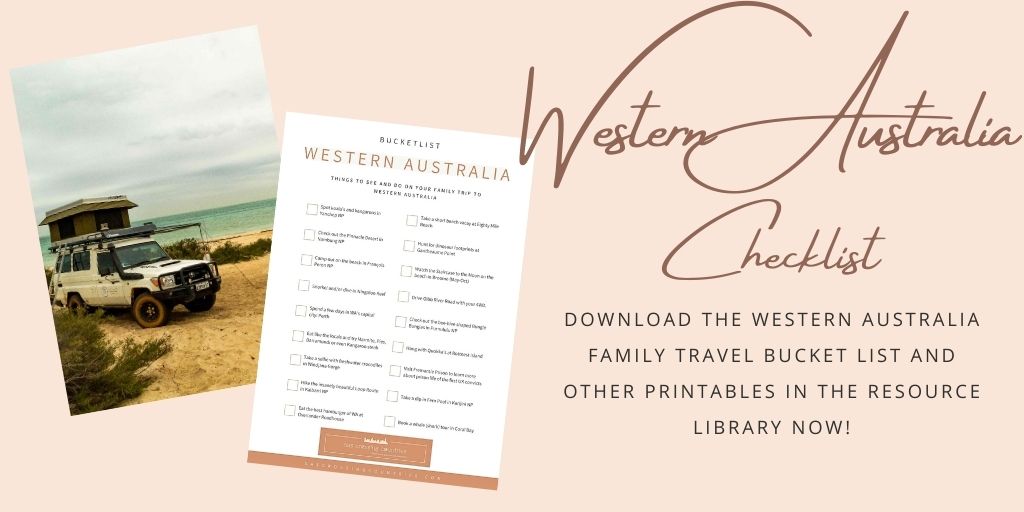
When we hit the west coast, we learned that Western Australia is like the country’s best-kept secret for families. One morning we were camping in WA on a beach in Peron NP, and by that afternoon we got soaking wet, because of the Quobba Blow Holes. Not one day in Western Australia with kids is the same!
Australia is very easy to travel with kids. I thought it’d be all roughing it in the Outback, but nope. There were cafes with babyccinos, hotels with family rooms that didn’t feel like shoeboxes, some of the best campsites ever: found in WA, and playgrounds everywhere. When road tripping from Perth to Darwin and exploring many WA places with kids, it was all a breeze!
Australia makes you slow down. We’d set out for a day packed with activities and end up spending hours building sandcastles because the beach was that good. We hiked to waterfalls where our son was playing with every stick and rock along the way. And of course when exploring Sydney with kids that first glimpse of the Opera House was a real moment. That’s the kind of stuff that sticks.


Best age to visit Australia
There’s no single “best” age for kids to visit Australia. It really depends on what kind of experiences you’re looking for as a family. That said, here’s a breakdown to help you decide what works best for your family.
Australia with a baby or toddler
If you’re traveling with babies or toddlers, Australia’s laid-back vibe, beautiful beaches, and wildlife parks are perfect. Destinations like the West Coast, Sunshine Coast, Margaret River, or the Great Ocean Road offer nature-based activities, stroller-friendly walks, and tons of opportunities for down time. Just keep in mind the long flights and big distances between places. It’s doable, but you’ll want to take it slow.
Australia with 5-9 year olds
This is a great age for Australia. Kids are old enough to remember the trip, curious enough to be blown away by kangaroos and koalas, and still happy with low-key adventures like snorkeling on the Great Barrier or Ningaloo Reef, exploring the Outback, or chasing waterfalls in national parks.
Australia with preteens
Preteens can handle more adventure and will get a thrill from surfing lessons, Indigenous cultural experiences, and exploring places like Rottnest Island by bike. They’ll also appreciate the big landscapes—Uluru at sunset, the Kakadu National Park is a must with kids, or hiking in the Grampians.
Australia with teenagers
Teens love Australia. Whether they’re into wildlife, food, beaches, cities, or adrenaline—there’s something for them. Think kayaking in Sydney Harbour, ziplining through the treetops, or even cage diving (if they’re up for it). It’s also a great age for giving them a bit more independence on the road.

Wildlife encounters – should you be scared
If you’re road-tripping or camping, wildlife becomes part of your daily rhythm. Picture waking up to kangaroos at your campspot in Yanchep NP or spotting emus on a drive through the outback. Many national parks have family-friendly trails where kids can safely spot wildlife without big hikes.
Australia does have some famously dangerous animals (hello snakes and spiders), but the odds of an incident are very low—especially if you stick to well-maintained areas and follow basic advice. Ranger talks and guided tours are great for kids to learn what’s safe, what’s not, and how to respect nature.
One of the best things we did in Western Australia was swimming with whale sharks and joining a whale watching tour. Just make sure you join an ethical organization. Check reviews to make sure they don’t feed wildlife and host small groups only to make sure you’re not bothering wildlife. This way you help stop animal abuse in the tourism industry.
“Isn’t everything in Australia trying to kill you?” Nope. Not even close.
Yes, Australia is home to some unique (and yes, occasionally dangerous) wildlife—but the reality is far less dramatic than the headlines make it sound. For families traveling with kids, the chances of a negative wildlife encounter are incredibly low—especially if you’re sticking to tourist-friendly places and following basic safety advice.

Kid friendly Australian dishes
Aussie cuisine is a fun mix of multicultural flavors, native ingredients, and regional traditions. There’s no shortage of dishes that even the fussiest little eaters will be excited to try.
Take grilled barramundi, for example—Australia’s iconic freshwater fish that’s as fun to say as it is to eat. It’s flaky, mild, and not at all “fishy,” which makes it perfect for kids who usually shy away from seafood. Our 10 year old loved it, and he doesn’t like fish. There’s something pretty cool about eating a fish you might’ve just seen swimming in the nearby river.
And then there’s kangaroo steak! It might sound a little adventurous, but kangaroo meat is lean, high in protein, and surprisingly tender when cooked right. Many Australian families eat it at home, and you’ll find it at restaurants and even in supermarkets. Kangaroo steak has a mild, slightly gamey taste. Kids will get a kick out of trying something they’ve never had before. Parents will love that it’s a sustainable choice. Kangaroos aren’t farmed. They roam wild and exist in large numbers (over 40 million!) across Australia. Carefully regulated harvesting helps keep their numbers in check and prevents overgrazing, which can damage ecosystems.
Lastly, there’s the good old meat pie. Found just about everywhere, from fancy cafés to roadside petrol stations, these golden pastries are packed with savory mince and rich gravy, sometimes with extras like peas or mashed potato. For kids, they’re the perfect mix of tasty and fun-to-eat. No forks, no fuss, just warm, flaky goodness that fits right in their hands. We have to admit, we ate our weight in pies while traveling through Australia.
Top Tours in Australia with kids
Best time to travel
Before we get into the best time to travel to Australia. It’s good to know that Australia is in the Southern Hemisphere, as is the rest of Oceania. The seasonal calender is flipped. Seasons in Australia are the opposite of what we’re used to in Europe! So when it’s winter in Europe, it’s summer in Australia—and vice versa. For example, if you’re traveling from Europe, it’s worth remembering: Christmas in Australia is in the middle of summer (think BBQs and beach days!), and July is the heart of winter. This flip in seasons can actually work in your favor—like escaping a cold US winter for an Aussie beach holiday!
Here’s how the seasons in Australia work:
Summer: December to February: the hottest time of the year, perfect for beach days, water parks, and coastal adventures. In many parts of Australia, especially the south (like Sydney and Melbourne), summer brings long, sunny days. But up north (like Cairns or Darwin), it’s the wet season—hot, humid, and often rainy with afternoon storms or cyclones.
Fall: March to May: a great season for travel, with warm days and cooler nights. The humidity drops, especially in the tropical north, making it a much more pleasant time to visit places like the Great Barrier Reef or Kakadu National Park. Down south, autumn is a beautiful time for road trips—think golden leaves in the countryside and fewer crowds.
Winter: June to August: winter varies a lot depending on where you are. In northern Australia, it’s the dry season—sunny, warm, and perfect for exploring places that are too humid or rainy in summer. In the southern parts, like Melbourne or Tasmania, expect cooler temperatures (sometimes snow in the mountains), ideal for cozy getaways or even skiing in the Snowy Mountains.
Spring: September to November: a lovely time to visit most of Australia. Wildflowers bloom in Western Australia, animals are more active, and the weather is warming up without the intense summer heat. It’s also a great season for outdoor festivals, national parks, and exploring wildlife with kids.
Weather in Australia per state
The best time to travel to Australia with kids depends a lot on where you’re going and what kind of family adventures you’re after—but generally, spring (September to November) and autumn (March to May) are ideal for most destinations across the country.
These shoulder seasons offer mild weather, fewer crowds, and better prices on flights and accommodation compared to the busy summer (December to February) or winter school holiday periods. Spring is perfect for exploring the beaches, seeing native wildflowers, and spotting wildlife with little ones, while autumn brings beautiful foliage, especially in southern regions like Victoria and Tasmania, and is a great time for road trips.
That said, Australia is huge and the weather varies a lot between states. To help you pick the best Australian travel destination for your family.
Below there’s a breakdown of the weather for all 6 states and the 2 mainland territories.


Australian Capital Territory – Canberra
Best time to visit: March to May or September to November
Canberra’s autumn and spring are beautiful, with mild days perfect for visiting museums, nature parks, and the annual Floriade flower festival.
Winters are chilly (but snow-free), and summers can be hot and dry.
New South Wales – Sydney, Byron Bay, Blue Mountains
Best time to visit: September to November (spring) or March to May (autumn)
These shoulder seasons offer warm, sunny weather without the intense summer heat or big holiday crowds.
Perfect for beach days in Bondi, hiking in the Blue Mountains, or festivals in Sydney. Summer is also fun but more crowded and expensive.


Northern Territory – Darwin, Kakadu, Uluru, Alice Springs
Best time to visit: May to October (dry season)
The tropical Top End (Darwin & Kakadu) is best in the dry season, when it’s warm, sunny, and less humid.
Central Australia (Uluru, Alice Springs) also shines from April to September—perfect for desert sunsets, stargazing, and not overheating while hiking.
Queensland – Cairns, Brisbane, Gold Coast, Whitsundays
Best time to visit: May to October (dry season)
Northern Queensland is tropical, so aim for the dry season to avoid heavy rains, cyclones, and stingers (jellyfish).
It’s a dream season for snorkeling in the Great Barrier Reef or splashing around on the Gold Coast. Southern QLD (like Brisbane) is lovely most of the year, with winter being pleasantly warm and dry.


South Australia – Adelaide, Kangaroo Island, Barossa Valley
Best time to visit: March to May or September to November
Mild temperatures make these seasons ideal for wildlife spotting on Kangaroo Island, cycling through vineyards, or wandering Adelaide’s family-friendly festivals.
Summers can get hot and dry, while winters are cooler but still manageable.
Tasmania – Hobart, Freycinet, Cradle Mountain
Best time to visit: December to March (summer)
Tasmania has a cooler climate, so summer is the best time for outdoor adventures—think hiking, wildlife, and pristine beaches.
Spring and autumn are still lovely (though chillier), but winter brings snow and shorter days, which may be tricky with younger kids.


Victoria – Melbourne, Great Ocean Road, Phillip Island
Best time to visit: March to May (autumn) or September to November (spring)
The weather can be unpredictable, but autumn and spring strike a nice balance for exploring cities like Melbourne, going on scenic drives, or watching the Penguin Parade.
Winter (June–August) is cool and great for snow fun in the High Country if your kids want to see snow!
Western Australia – Perth, Broome, Ningaloo Reef, Margaret River
Best time to visit: April to October
WA is vast, so timing depends on where you’re going.
The north (Broome, The Kimberley) is best visited in the dry season (May–October).
Perth and the southwest shine in spring (Sept–Nov) with wildflowers blooming and perfect beach weather.

Family safety in Australia
Must have Australia emergency numbers for traveling families
For urgent police, fire and ambulance emergency assistance in Australia call 000. You don’t need to add the country code, even if you don’t buy a local eSIM. You can dial 000 if you call from a landline or mobile phone. In addition Australia has a special mobile emergency number as well: 112. Easier to remember for countries also using 112 for emergencies.
If you are hearing or speech impaired call 106, which is a text-based emergency number.
Some other helpful phone numbers:
- Poisons Information Center: +61 13 11 26
- Mental Health Crisis Line: +61 13 11 14
- Medical assistance: +61 1800 022 222
- After hours General Practitioner (only in major cities): +61 13 74 25
Travel First Aid Kit
Having the best first aid kit for travel abroad offers you peace of mind! A good travel first aid kit contains items equipped to deal with cuts, bruises, sprains and breaks. And should also be filled with over the counter medicine for insect bites, fever, pain and nausea.
There are plenty of first aid travel bags on the market that are pre-made. But these won’t contain over the counter medicines so add these items to the kit yourself:
- paracetamol for kids and adults
- nausea and vomiting medicine
- ORS for kids and adults
- coughs and colds medicine
- allergies tablets (anti-histamine for bites, stings, hay fever and sudden allergic reactions)
Traveling with prescribed medication
When traveling with prescribed medication you should:
- Bring your medication passport
- Take your pills and medical equipment with you in their original and correctly labelled packages
- Carry your medicine in your hand luggage with a copy of your prescription
- If you or any of your family members take medication that falls under the Opium Law (aka Opium Act), you should take appropriate action well before embarking on your trip.

Vaccinations
Travelers to Australia are advised to get vaccinated for hepatitis A, hepatitis B, Japanese Encephalitis, Yellow Fever, and rabies. This is in addition to the childhood vaccinations that are part of your countries vaccination program.
Always call your doctor as soon as you know where you’re traveling to, because some vaccines need to be repeated once or even twice before your departure. You should only take pre-travel advice about vaccinations from your doctor.
Travel Insurance
Don’t forget a travel insurance for your trip! Heymondo covers medical emergencies, theft, delays, cancellations, lost luggage, and more, with 24/7 worldwide assistance and medical chat. All Sas Crossing Countries readers, get 5% off Heymondo travel insurance! Other travel insurance companies worth checking out are World Nomads, and Safety Wing.
Stay connected on the road

Use our Saily 5% discount code SPECIAL5 for Sas Crossing Countries readers only!

Australia Posts on the Blog


Background info about Australia
Australia is the largest country of Oceania and the sixth-largest country of the world. It has a population of about 26 million people. The first people inhabited the country about 65.000 years before the first arrival of the Dutch explorers in the early 1700’s.
In 1770 the Brits claimed the eastern half first, before colonizing the rest of the country.
States and Territories:
- New South Wales (NSW)
- Queensland (QLD)
- South Australia (SA)
- Tasmania (TAS)
- Victoria (VIC)
- Western Australia (WA)
- Northern Territory (NT)
- Australia Capital Territory (ACT)
A family road trip through Australia is an experience you’ll never forget. The country is extremely diverse, with an endless list of best places to visit with kids. Every 100km the landscape you’ll drive through changes. There are countless of hikes you and your family can undertake. And so many family friendly cities to explore.

Planning a trip to Australia? Check out these companies:

Find Accommodation via Booking.com, Vrbo and TripAdvisor
Find Hostels via Hostelworld

Book Tours & Attractions via Viator, Get Your Guide or Klook
Find a Rental Car via Discover Cars

Book Bus, Train and Transfer via 12Go
Book Ferry Tickets via Ferryhopper

Get Travel Insurance via World Nomads, Heymondo, Safety Wing or Travelex
Get a Visa via iVisa

Get a VPN via NordVPN

How to plan your family road trip – our tips